

Exploring historic cemeteries offers a window into the past, revealing rich symbolism etched in stone. This guide explores common gravestone symbols and their meanings and provides resources for further exploration.
The Beautification of Death Movement and Gravestone Symbolism
The beautification of death movement, which emerged in the late 18th century and reached its height during the Victorian era, transformed how people memorialized the deceased. In contrast to the stark imagery of earlier colonial gravestones—often featuring skulls, crossbones, and hourglasses as reminders of mortality—this movement ushered in a shift toward romanticized depictions of death and the afterlife.
During this period, gravestone art moved away from grim personifications of death and instead embraced symbols of peace, hope, and eternal life. Angels, urns, and weeping willows became common, reflecting the era’s sentimental view of death as a transition to a heavenly existence rather than an end. The design of burial containers evolved as well, with hexagonal coffins giving way to rectangular caskets— a term deliberately chosen for its association with jewelry boxes, emphasizing reverence over finality.
Elaborate mourning rituals, including intricate gravestone inscriptions and highly decorated caskets, reflected the Victorian ideal of honoring the dead with beauty and sentimentality. The movement also influenced the rise of rural garden cemeteries, such as Mount Auburn in Massachusetts, which were designed as serene landscapes where visitors could reflect and remember their loved ones in picturesque surroundings.
Many of the symbols found on 19th-century gravestones—such as urns draped in fabric, clasped hands, and angelic figures—stem from this cultural shift. They convey not only personal grief but also the prevailing belief in the soul’s peaceful transition into eternity.
In Alexandria, you can see many of these symbols within the historic Wilkes Street Cemetery Complex, where elaborate Victorian-era gravestones and monuments reflect the ideals of the beautification of death movement. Understanding this influence enriches our appreciation of gravestone symbolism and offers a deeper connection to the history preserved in Alexandria’s cemeteries.
Cemetery Folklore & Traditions
Black Mourning Attire: Wearing black clothing to a graveside service kept the spirits at the cemetery from noticing you so they wouldn’t follow you home.
Cemetery Fences: Cemetery fences, particularly those made of wrought iron, have long been associated with both practical and symbolic purposes, including warding off spirits. While some cultures believe fences, especially wrought iron, can repel both benign and malevolent spirits, others see them as a way to physically preserve the dead or mark sacred boundaries.
Common Gravestone Symbols and Their Meanings
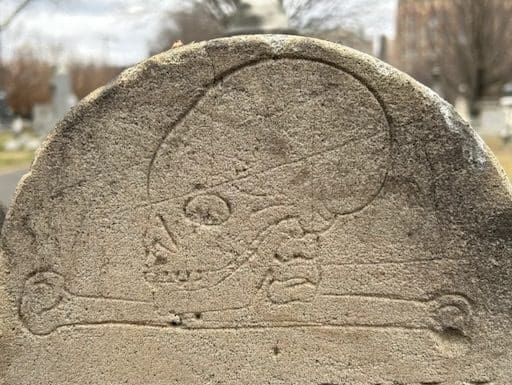
Skull and Bones
- Symbolism: Represents mortality and serves as a reminder of life’s transience.
- Historical Context: Prevalent in the 17th and 18th centuries, especially in Puritan New England, emphasizing the inevitability of death.

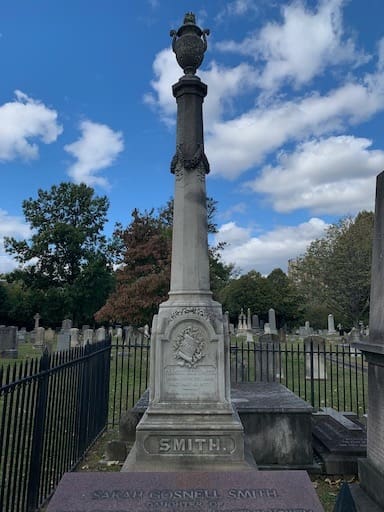
Obelisk with Urn
- Obelisk: Symbolizes eternal life and remembrance.
- Urn: A symbol of death and mourning. Its presence on gravestones signifies the body’s return to ashes and dust, reflecting the transient nature of life.

Lambs
- Symbolism: Denotes innocence and is commonly found on children’s gravestones.
- Religious Significance: In Christianity, the lamb represents Jesus Christ, the “Lamb of God.”
Anchors
- Symbolism: Represents hope and steadfastness.
- Maritime Connection: This may indicate the deceased’s profession as a sailor or their love for the sea.

Medical Symbols
- Rod of Asclepius: A staff with a single serpent, symbolizing healing and associated with medical professionals.
- Caduceus: A staff with two serpents and wings, often used to represent commerce but commonly associated with medicine in the United States.
Acorn
- Symbolism: Represents potential, strength, and prosperity. The acorn signifies the promise of new life and growth, reflecting the idea that from small beginnings come great things.
Alpha and Omega
- Symbolism: The first (Alpha) and last (Omega) letters of the Greek alphabet, symbolizing the beginning and the end. In Christian contexts, they represent God’s eternal nature.
Beehive
- Symbolism: The beehive represents industriousness, unity, and the collective effort of a community. It signifies how individuals working together can achieve greater accomplishments, reflecting societal values of cooperation and hard work.
Broken Column
- Symbolism: Signifies a life cut short, often representing someone who died young or in the prime of life. The broken column reflects an unfinished life.
Cornucopia
- Symbolism: A symbol of abundance and nourishment, reflecting a fruitful life. The cornucopia, or “horn of plenty,” signifies prosperity and the blessings of a life well-lived.
Crossed Swords
- Symbolism: Indicates military service or a life lost in battle. Crossed swords often honor those who served courageously.
Dogwood
- Symbolism: Represents Christianity and divine sacrifice; the petals are often associated with the Cross.
Fern
- Symbolism: Symbolizes humility and sincerity; in some cultures, it represents solitude.
Firefighter Symbolism
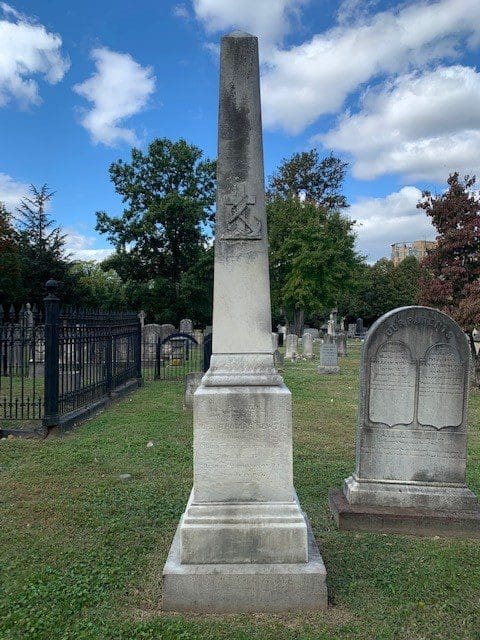
- Maltese Cross: A common emblem on firefighter gravestones, the Maltese Cross signifies protection and honor, reflecting the bravery and selflessness inherent in the firefighting profession (see image of Robert I. Taylor’s gravestone under Improved Order of Red Men (I.O.R.M.) section below)
Grapes
- Symbolism: Denote the blood of Christ in Christian symbolism; also represent abundance and the fruits of a good life.
Horseshoe
- Symbolism: Emblem of protection and good luck; may indicate a love for horses or equestrian activities.
Improved Order of Red Men (I.O.R.M.)
- Origins and Purpose: Established in 1834, the I.O.R.M. traces its roots to the Sons of Liberty from the American Revolutionary era. The organization is devoted to promoting the principles of freedom, friendship, and charity.
- Gravestone Symbols: Members’ gravestones often display motifs such as tomahawks, war bonnets, and other Native American-inspired imagery, symbolizing the group’s patriotic spirit and historical connections.


Ivy
- Symbolism: Symbolizes fidelity, friendship, and immortality; its clinging nature represents attachment and undying affection.
Keys
- Symbolism: Represent spiritual knowledge or the keys to heaven; may also signify the deceased’s role as a guardian or gatekeeper.
Laurel Wreath
- Symbolism: Emblem of victory and accomplishment; often used to signify academic or military achievements.
Oyster Shells
- Symbolism: In African American cemeteries, particularly among the Gullah community, placing oyster shells on graves signifies a connection to the sea. This practice reflects the belief that just as the sea brought their ancestors to foreign lands, it will also return their spirits to their homeland in the afterlife.
- Local Connection: While walking through the Wilkes Street Cemetery Complex, visitors may notice oyster shells scattered across the grounds. This subtle yet significant presence suggests a deeper history—one that hints at the many unknown African American graves within the complex. The absence of marked headstones does not mean these individuals are forgotten. Instead, the scattered shells serve as quiet echoes of a burial tradition that has endured despite time and loss. They remind us of the resilience of Alexandria’s African American community and the importance of preserving and recognizing these sacred spaces.
Poppy
- Symbolism: Represents eternal sleep and peace; commonly associated with remembrance of soldiers who died in war.
Scallop Shell
- Symbolism: Symbol of pilgrimage and travel; in Christianity, it represents baptism and resurrection.
Thistle
- Symbolism: Emblem of Scottish heritage; symbolizes resilience and determination.
Torch (Inverted)
- Symbolism: An extinguished or inverted torch represents death or a life extinguished; an upright torch can signify life or the eternal flame.
Wheat Sheaf
- Symbolism: Symbolizes a long, productive life and the harvest of a life well-lived; often found on the gravestones of the elderly.
Winged Skull
- Symbolism: Common in 17th and 18th-century gravestones; represents mortality and the fleeting nature of life, with wings symbolizing the ascension of the soul.
Take This Guide Into the Field
If gravestone symbolism draws you in, this guide has a book edition. Symbols & Superstitions: Reading Alexandria’s Gravestones combines the complete symbol guide with our companion guide to cemetery superstitions and folklore in a single illustrated field guide — the carved language of the stones and the traditions of the living, with Alexandria examples throughout. All of the research remains free on this site, or browse the full E-Book Library.
Further Reading and Resources
The following sources were used in researching and writing this page. For those interested in exploring gravestone symbolism and burial practices further, these works provide valuable insights:
- Bromberg, F. W., & Shephard, S. J. (2006). The Quaker Burying Ground in Alexandria, Virginia: A study of burial practices of the Religious Society of Friends. Historical Archaeology, 40(1), 57-88. Springer. Retrieved from https://www.jstor.org/stable/25617316
- Keister, D. (2004). Stories in stone: A field guide to cemetery symbolism and iconography. Gibbs Smith.
- Snider, T. (2017). Understanding cemetery symbols: A field guide for historic graveyards. Castle Azle Press.
- The Association for Gravestone Studies. (n.d.). Gravestone symbolism and preservation. Retrieved from https://www.gravestonestudies.org
- The Catholic Cemeteries. (n.d.). Gravestone symbols and their meanings. Retrieved from https://catholic-cemeteries.org/wp-content/uploads/2022/07/Gravestone-Symbols-and-Their-Meanings.pdf
Understanding these symbols enriches our appreciation of historical cemeteries, offering insights into the cultural and personal narratives of those who came before us.