


Historic Context of the Methodist Protestant Cemetery, Alexandria, VA
The Methodist Protestant Cemetery, Alexandria, VA, established in 1833, is one of the thirteen burial grounds of Alexandria’s Wilkes Street Cemetery Complex and holds about 1,500 interments.
Origins of the Methodist Protestant Church
The Methodist Protestant Church grew out of a reform movement within the Methodist Episcopal Church. Reformers who wanted lay members to share in governing the church, and who objected to the power of its bishops, were expelled in 1827 and 1828. They organized their own denomination, formally constituted in 1830. Like its parent church, it held to the teachings of John Wesley, the Anglican cleric and theologian whose revival within the Church of England gave rise to Methodism, with their emphasis on salvation, the interplay of grace and faith, and a holy life. The new church kept traditional Methodist worship but did away with bishops and gave lay members an equal voice with the clergy. One of its best-known ministers, Thomas H. Stockton, served as Chaplain of the United States House of Representatives in 1833, 1835, 1859 and 1861.
Methodist Churches in Alexandria
In 1829, members of Alexandria’s Trinity Church founded the Methodist Protestant Church of Alexandria at 110 South Washington Street; the congregation relocated in 1890. For a time, three Methodist churches stood along Washington Street: Trinity (founded in 1774), Methodist Protestant (founded in 1829) and Washington Street United Methodist (founded in 1849).
In 1952 the Methodist Protestant Church was gutted by fire, and the congregation decided not to rebuild. Today the Alexandria Bible Church on West Braddock Road is considered its spiritual heir.
Founding and Layout of the Methodist Protestant Cemetery, Alexandria, VA
The Methodist Protestant Cemetery was formally established in 1833. No longer an active burial ground, it is maintained by the City of Alexandria. It occupies original lots 99, 100, 108 and 109 of Spring Garden Farm, laid out in 1796 by Fairfax County Surveyor George Gilpin. Records show that lot sales and burials began in 1836, although the oldest tombstone, that of Ann Avery, is dated June 20, 1830. The cemetery was later extended south to the edge of the Presbyterian Cemetery, but the date of that expansion is not documented.
A Rare Surviving Receiving Vault in the Methodist Protestant Cemetery, Alexandria, VA
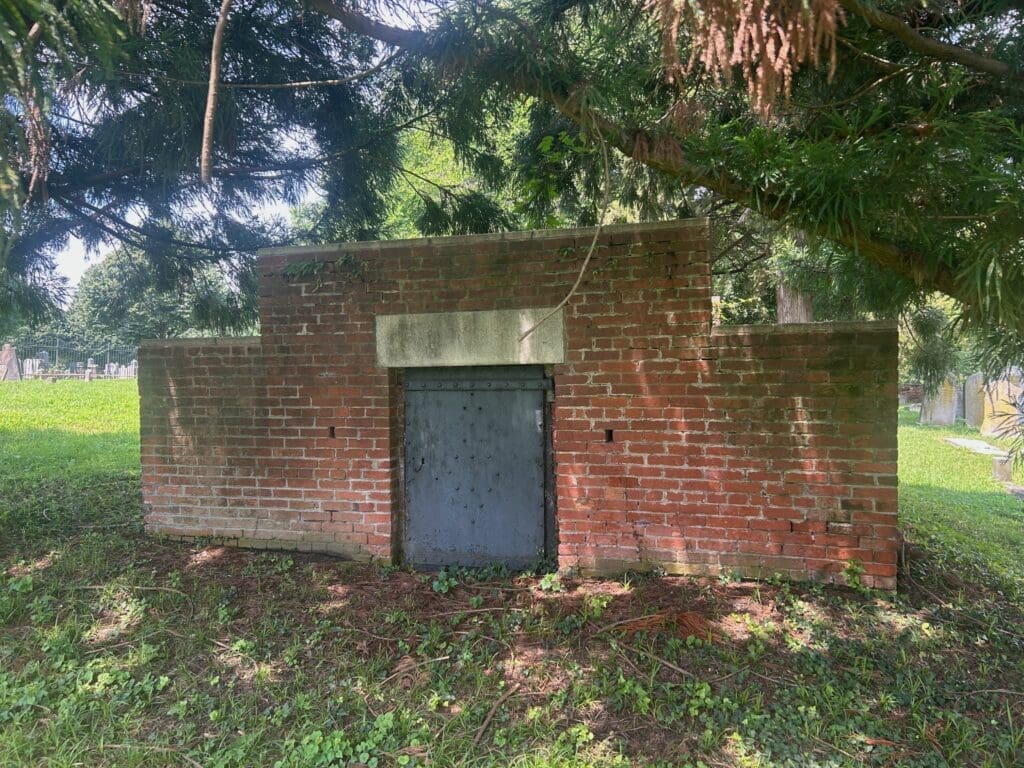
A notable feature of the Methodist Protestant Cemetery is the partially intact receiving vault in the southwest section of the grounds. It is one of only two known receiving vaults left in the Wilkes Street Cemetery Complex; the other is in Bethel Cemetery. Receiving vaults served an essential purpose in Alexandria’s colder months, when the ground was too frozen for burial. Caskets were held in the vault until the spring thaw allowed a proper interment. In design, the vault closely resembles the private Hooff family vault in nearby St. Paul’s Cemetery and the original Washington family vault at Mount Vernon. Though long out of use, it is a rare, tangible reminder of nineteenth-century funeral practices.

Fraternal Symbols on the Gravestones of the Methodist Protestant Cemetery, Alexandria, VA
Many gravestones in the Methodist Protestant Cemetery carry the emblems of fraternal organizations that were popular in nineteenth-century America. The letters I.O.R.M., for the Improved Order of Red Men, appear on the gravestone of firefighter Robert I. Taylor, whose story appears below.
B
Joseph Bruin (1809 – 1882): Slave Trader, Proprietor of the Duke Street Slave Jail, and a Figure in Anti-Slavery Literature
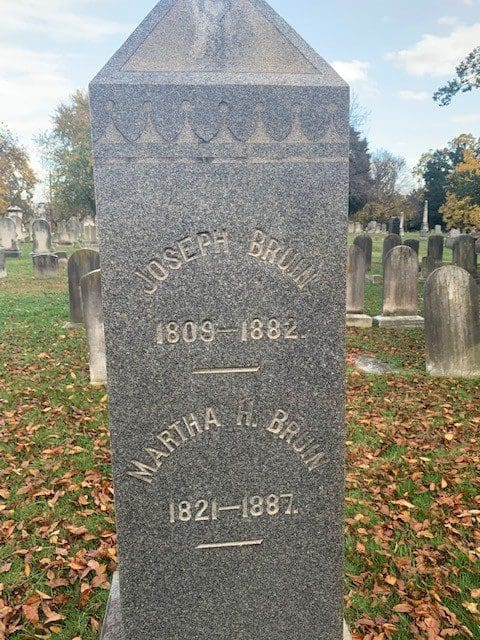
Buried in the Methodist Protestant Cemetery, Alexandria, VA, is Joseph Bruin (1809 – 1882), a slave dealer who ran one of the largest slave pens in Alexandria. In 1844 he bought the brick Federal-style building at 1707 Duke Street, with the land beside it, for his slave jail.
Read the rest of the story in Uncovering Alexandria’s Dark History: The Slave Dealer and Jail That Inspired Uncle Tom’s Cabin.

D
Major George Duffey (April 6, 1820 – July 10, 1896): Third-Generation Silversmith and Confederate Artillery Officer
Major George Duffey, a third-generation Alexandria silversmith, was born on April 6, 1820, and died on July 10, 1896. He is buried in the Methodist Protestant Cemetery, Alexandria, VA.
His grandfather, John Duffey, made the silver trowel that President George Washington used on September 18, 1793, to lay the cornerstone of the United States Capitol. The same trowel was later used in laying the cornerstones of the Smithsonian, the United States Supreme Court, the National Cathedral, the Library of Congress and the Jefferson Memorial. Today it is kept at the George Washington Masonic National Memorial.
George Duffey’s father, George Hurd Duffey (September 11, 1801 – February 2, 1852), kept a tavern on Royal Street. Known as a skilled “mechanic,” he worked in steel, brass, silver and gold at his shop on North Royal Street. He, too, is buried in the Methodist Protestant Cemetery.
| C.S.A. GEORGE DUFFEY Major of Artillery died July 10, 1896. |
Read more in Major George Duffey: Alexandria’s Silversmith & Confederate Soldier.
E
William E. Evans (1827 – November 17, 1855): Volunteer Firefighter Killed in the Dowell China Shop Fire


A native of Liverpool, England, William E. Evans was one of the Star Fire Company members killed on November 17, 1855. They were fighting a fire set by an arsonist at the Dowell China Shop, in Hugh Smith’s warehouse at 215–217 King Street.
As the firefighters gained control of the upper levels and some began to extinguish the cellar fire, an unexpected tragedy struck around four in the morning. Just as the firemen were acknowledging their success, the west gable wall of the warehouse collapsed in a horrifying crash, causing floors to burst through. This incident killed seven respected citizens, including Evans, and injured several others.
Catherine Weinraub, “The Firefighter’s Memorial in Ivy Hill Cemetery, Alexandria, Virginia”
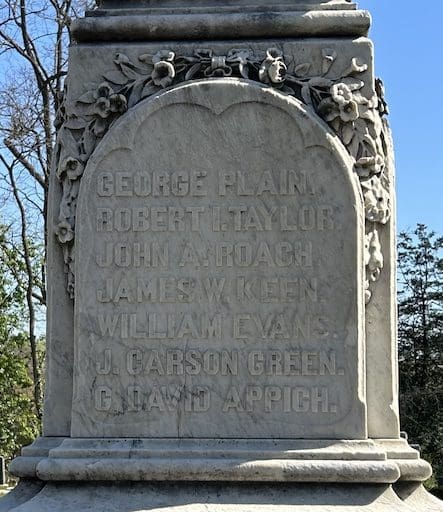
The shock of the collapse delayed the recovery of the bodies for several hours. The seven men killed were Evans; G. David Appich, buried in the Presbyterian Cemetery; J. Carson Greene, buried in Christ Church Cemetery; John Roach, buried in St. Mary’s Catholic Cemetery; and George Plain, Robert Taylor and James Keene, all buried in the Methodist Protestant Cemetery, Alexandria, VA.
The funerals began on November 18, when Evans, Appich, Plain, Taylor and Keene were buried, and several thousand people are said to have attended. Roach and Greene were buried the next day. Read the full story in The Tragic Night of the Alexandria Fire of 1855.

| WM. E. EVANS A native of Liverpool, England was Killed in Alexandria by the Fire on King St. Nov. 17th 1855 aged 28 years Erected to his memory by his brother & sister Thos. & Esabell Evans |
G
Gustavus Gibson (c. 1756 – December 14, 1831) and His Family: A Family That Freed One Another
Gustavus Gibson was born enslaved, probably around 1756. For much of his life he was held by George Graham of Washington, D.C., who served as Acting Secretary of War under President James Monroe. Even before he was legally free, Gibson lived apart from the Grahams, and the 1820 census lists him as the head of his own household. On October 23, 1824, he bought his freedom.
Freedom for himself was only the beginning. Gibson set out to free his children, and over the next two decades the family worked to free one another. In 1827 he purchased the freedom of his son John from Andrew and Catherine Ramsay. When Sarah and Joseph Gibson were emancipated, the deed referred to “the understanding between [them] and Gustavus Gibson, father of said Sarah and Joseph.” Catherine Graham Ramsay, George Graham’s sister, sold his sons George and James in 1832 and helped free them in 1838, and their brother Richard Henry may have been freed the same way that year. In 1843 the brothers George, John, Daniel and Richard Henry freed their sister Emily Hampton, “our sister,” together with her children William Wilberforce, Sarah Frances and Daniel. Emily had named her son for William Wilberforce, the British statesman who led the campaign to abolish the slave trade.
Gibson also served the town. By July 1830 he was cleaning the Market House on Market Square and lighting its lamps, paid by the city each quarter. A pay record dated October 31, 1831, reads: “To Gusty Gibson, To one Qtr. Sallery for cleaning Market House & Lighting Lamps $15.50.” After his death, his son James or Henry carried on the work, collecting the city’s pay until 1851, when the job went to a white man, William Arnold.
Gustavus Gibson died on December 14, 1831, according to the notice the Alexandria Gazette published two days later: “The deceased was a free man of color, and has long been favorably known to the people of Alexandria as an honest and respectable citizen.” The gravestone he shares with his wife, Basheba, carved after her death in 1844, gives the year as 1834 and his age as 78. Basheba died on June 10, 1844, in the 61st year of her age. They rest side by side in lot S31.
| Sacred to the memory of BASHEBA GIBSON who died June 10th 1844 in the 61 year of her age In the adjoining lot is her Husband GUSTAVOUS GIBSON who died Decr. 14, 1834 aged 78 years. |
In the adjoining lot, S15, a single stone, now broken, names three more of the Gibson children: Richard H. Gibson, who died November 12, 1859, aged 36, remembered as “a dutiful Son, a kind and affectionate brother”; his brother George M. Gibson, who died December 31, 1853; and their sister Hester E. Clark, who died July 24, 1846, in the 26th year of her age.
| Sacred to the memory of RICHARD H. GIBSON Died November 12th 1859 aged 36 years. He was a dutiful Son, a kind and affectionate brother and was beloved by all who knew him Here also lies a brother GEORGE M. GIBSON Died December 31, 1853 and also a sister HESTER E. CLARK Died July 24th 1846 in the 26th year of her age. May they rest in peace. |
The Gibsons’ story is all the more striking for where it is told. A short walk away in this same cemetery lies Joseph Bruin, the slave trader whose Duke Street jail held people for sale. Gustavus Gibson began the work, and his children spent the next two decades freeing one another from the system Bruin profited from.
The Gibson family’s story was brought to light by historian Greg A. Beaman in his 2026 documentary study of Market Square for Alexandria Archaeology and in his “Out of the Attic” column for the Office of Historic Alexandria. Gravestone inscriptions are from Pippenger’s Tombstone Inscriptions of Alexandria, Virginia, Volume 2.
Under the Wheels: The Tragic Fate of Charles Glasscock
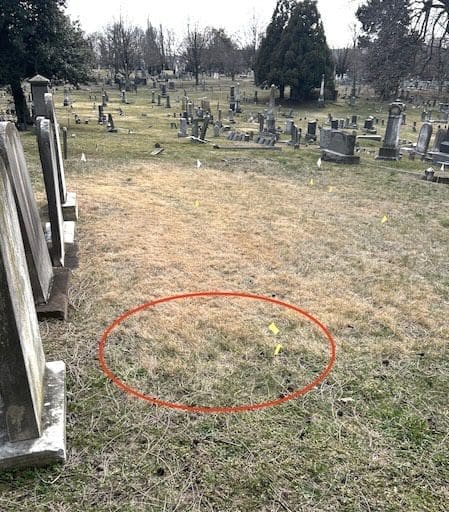
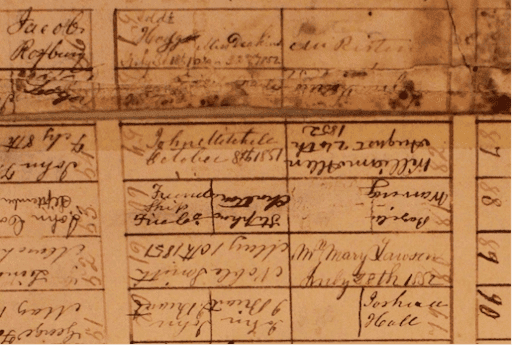
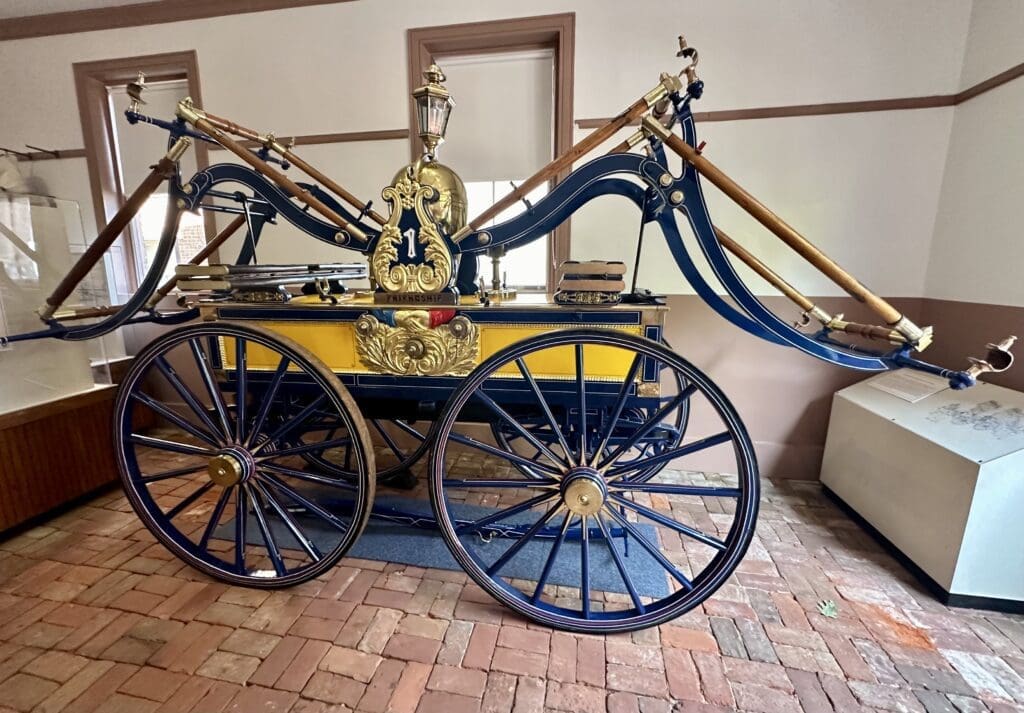
Charles Glasscock, a member of the Friendship Fire Company, died on June 30, 1852, two days after he was fatally injured in an accident involving the company’s fire engine. He was buried in the company’s plot, but with no gravestone to mark it, the exact location of his grave was unknown. It was found on February 16, 2024, by archaeologist Mark Ludlow, who was using ground-penetrating radar (GPR) to search for James Keene (see below), another Friendship Fire Company member, who was killed fighting the Dowell China Shop fire on King Street on November 17, 1855.
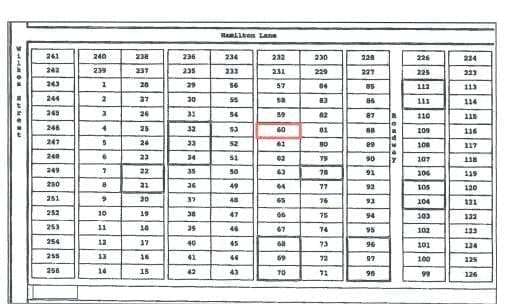
Ludlow’s GPR scan of plots E60 and E61 in the Methodist Protestant Cemetery, Alexandria, VA, produced a surprising result. Lot E61 has no grave markers, even though James W. Patterson bought it on September 7, 1848, as recorded in Pippenger’s Tombstone Inscriptions of Alexandria, Virginia, Volume 2. In plot E60, Ludlow found a single burial, believed to be Glasscock’s. The finding overturned earlier assumptions and suggests that Glasscock is the only person buried in plot E60.

The plot’s history adds to the story. Enoch Grimes first acquired it, in purchases dated November 2, 1847, and January 12, 1848, for $100.00. After Glasscock’s death in 1852, the plot passed to the Friendship Fire Company, a sign of how the company honored his sacrifice.



H
Samuel Hilton (February 8, 1759 – February 22, 1852): Tavern Keeper and Witness to a Nation’s Founding
Born on February 8, 1759, Samuel Hilton was known for his cooking, especially his turtle soup, oysters, fish and wild fowl. From November 1796 to November 1799 he kept Lamb’s Tavern, at the northwest corner of Duke and South Union Streets. The tavern drew the influential and the ordinary alike and was a center of the town’s social and political life.
Lamb’s Tavern was the first meeting place of the old Alexandria-Washington Lodge. There, on February 25, 1783, the warrant from the Grand Lodge of Pennsylvania establishing Lodge No. 39 in Alexandria was read. Many of the lodge’s members were close associates of George Washington and veterans of the Revolutionary War, among them Samuel Hilton himself, Dr. Elisha C. Dick and George Gilpin.
In 1796, John Gadsby announced that the tavern had been refitted as a well-equipped house, with stables and good provisions. By 1798, perhaps because his trade was falling off, Hilton had leased the tavern, and by December 1799 William Buel had taken it over and was offering board. The tavern burned in 1803.
On February 22, 1799, George Washington celebrated his last birthday in Alexandria. A military display was followed by a festive retreat to Hilton’s tavern and other local inns, and that evening a grand ball was held at Gadsby’s Tavern. It was the last birthday celebration Washington attended before his death that December.
Hilton died on February 22, 1852, Washington’s birthday, a coincidence that ties his story once more to the first president. An obelisk marks his grave in the Methodist Protestant Cemetery, Alexandria, VA. It also bears the initials of Samuel N. Hilton and James Harrington Hilton, who erected it. Hilton’s wife, Catherine, who died on April 24, 1873, is buried with Samuel N. Hilton and James Harrington Hilton in Washington’s historic Congressional Cemetery.
| In memory of SAMUEL HILTON born on Feb. 8, 1759 died Feb. 22, 1852 His memory will ever be cherished as a kind husband and father. Rest to thy soul my father In that bright land above: Soon we’ll meet together in realms of heavenly love. S.N.H. Erected by J. H.H |
J
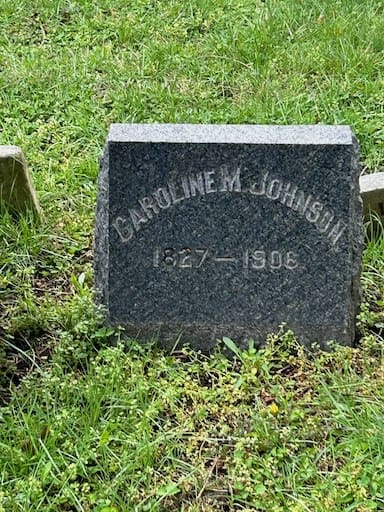
Caroline Matilde Johnson (1827 – 1906): A Devoted Confederate Supporter with a Family Legacy of Military Service
Caroline Matilde Johnson, born Caroline Matilde Weedon, was a devoted supporter of the Confederacy during the Civil War. She is best known for smuggling medical supplies and other necessities through Union lines to Southern soldiers, hiding them in pockets sewn into a petticoat she wore beneath her wide skirts.
Shortly before the war, Caroline’s husband, John Johnson, was attacked on his way home from a meeting and suffered a concussion. In May 1860 he was taken to Occoquan, Virginia, just south of the Fairfax County line, where he died of his injuries in December 1860 or early 1861. He is buried in Occoquan.
Their son, John T. Johnson Jr. (1860 – 1910), married Mary Agnes Aitcheson (1867 – 1954), a member of a prominent Alexandria family. He had a long career with the Robert Portner Brewing Company, also worked as a bookkeeper for Tacket and Marshall and as clerk of the city council, and at his death was president of the Alexandria Chamber of Commerce. He is buried next to his mother.

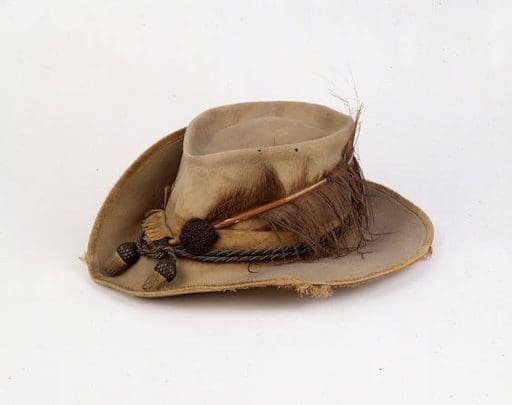
Caroline was once asked to find a plume for the celebrated Confederate cavalry general J.E.B. Stuart, who had lost his own. It may have been the plumed hat Stuart lost at Verdiersville on August 18, 1862. He had stopped there the evening before, and at dawn Federal cavalry, who had crossed the Rapidan at Raccoon Ford during a brief lapse in the Confederate pickets, rode into the village. Stuart escaped, but he left behind on the porch his cloak, his haversack and, most famously, his new plumed hat. Few episodes of the war humiliated Stuart more: the Yankees had carried off the signature of one of the Confederacy’s most celebrated cavalry commanders.

View source
Stuart had his revenge on August 22, 1862, at Catlett’s Station, when he captured General Pope’s headquarters train, with Pope’s official papers, the army’s money chest and the personal baggage of the general and his staff. (Pope himself was several miles away.) Before sending Pope’s coat to Governor John Letcher in Richmond as a prize of war, Stuart wrote to Pope: “General, You have my hat and plume. I have your best coat. I have the honor to propose a cartel for the fair exchange of the prisoners.” Pope never replied, but Stuart had evened the score for the hat and cloak lost at Verdiersville.
Admired across the South for his daring and charisma, Stuart was mortally wounded at the Battle of Yellow Tavern on May 11, 1864, and died at 7:38 p.m. the next day. His death was a severe blow to Confederate morale. His grieving widow, Flora, wore mourning black until her own death in 1923.
Caroline’s sister, Catherine Ann Weedon, married George O. Plain, who was killed with six other firefighters in the Dowell China Shop fire on King Street on November 17, 1855. Each October, the Alexandria Fire Department holds a memorial service at the Firefighters Memorial in Ivy Hill Cemetery for the men lost in that fire.

Caroline’s family also had ties to the Revolution. According to the Johnson family, they are related to the family of General George Weedon of the Continental Army, though Caroline was not his direct descendant.
The Johnson family is buried in plots E58 and E59 of the Methodist Protestant Cemetery, Alexandria, VA. Read more in Caroline Matilde Johnson: A Confederate Supporter’s Unsung Legacy.
Acknowledgment: Special thanks to Tracy Burke, a descendant of Caroline Matilde Johnson, for sharing oral and written history of the Johnson and Aitcheson families. Her contributions were essential to piecing together the story of Caroline Matilde Johnson and her family’s legacy in Alexandria.
K
James W. Keene (1832 – November 17, 1855): Friendship Fire Company Volunteer Killed in the Dowell China Shop Fire
James W. Keene, a member of the Friendship Fire Company, was killed fighting the Dowell China Shop fire on November 17, 1855. He is believed to be buried in the Methodist Protestant Cemetery, Alexandria, VA.
Recent evidence has cast doubt on the earlier belief that Keene was buried in plot E60, the Friendship Fire Company plot. More research is needed to find his exact grave in the Methodist Protestant Cemetery.

Read more about the hose reel in Discover the Remarkable Craftsmanship of Robert F. Prettyman’s Hose-Reel Carriage at Friendship Firehouse Museum.
Keene’s name and those of the six other men killed in the fire are carved on the Firefighters Memorial in Ivy Hill Cemetery, at 2823 King Street in Alexandria. The memorial was dedicated in the newly established cemetery on the first anniversary of the fire.

Each October, during Fire Prevention Week, the Alexandria Fire Department holds a service at the monument, where the names of the fallen are read aloud. Keene is honored there each year alongside the city’s other firefighters who died in the line of duty and departed members of the department.

William H. King (1844 – March 28, 1870): Train Engineer Killed in a Locomotive Explosion
Train engineer William H. King, 26, was killed instantly on March 28, 1870, when the locomotive Harrisonburg exploded from excess steam pressure near Fairfax Station.
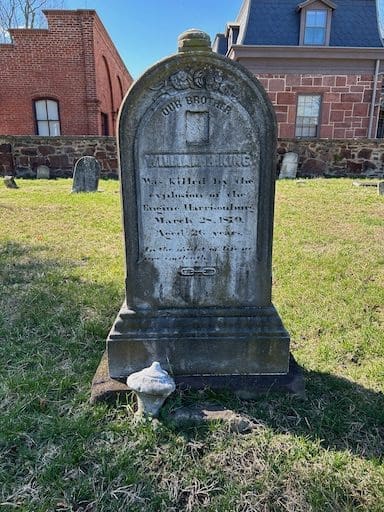
| Our Brother WILLIAM H. KING Was Killed by the explosion of the Engine Harrisonburg March 28, 1870 Aged 26 years. In the midst of Life we are in death. |
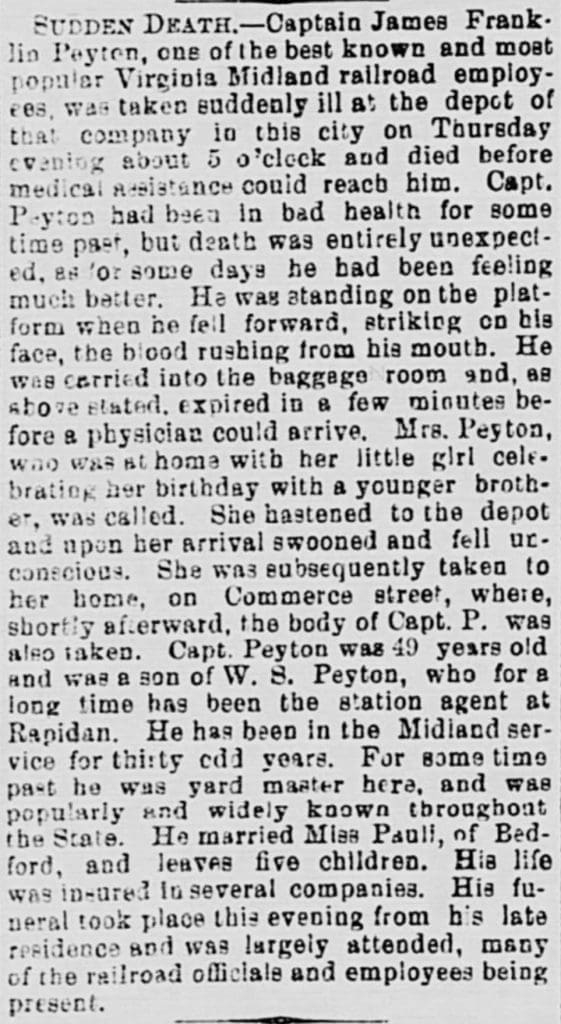
Conductor James Franklin Peyton was badly hurt, and track worker Martin Murphy was severely scalded, but both men recovered.
Captain Peyton (September 24, 1840 – July 3, 1890) is buried in the Washington Street (Union) Cemetery, a short walk from King’s grave in the Methodist Protestant Cemetery, Alexandria, VA. He died unexpectedly while working for the Virginia Midland Railroad, which grew out of the 1872 merger of the Orange and Alexandria with the Lynchburg and Danville. His obituary gives further details. What became of Murphy is unknown.

The Orange and Alexandria Railroad has been called “the most fought-over railroad in the American Civil War.” Running from Alexandria to Gordonsville, where it connected with other key lines, it was a vital supply and transportation route for both sides, and Union and Confederate forces fought repeatedly for control of it. Its tracks saw numerous battles and skirmishes. Fairfax Station served as the evacuation point for Union soldiers wounded at Second Manassas and Chantilly. It remained an active railroad depot, the last in Fairfax County, until 1973, and the site is now home to the Fairfax Station Railroad Museum.
P
George O. Plain (1819 – November 17, 1855): Painter and Volunteer Firefighter Killed in the Dowell China Shop Fire
George O. Plain was one of the seven men killed in the early morning hours of November 17, 1855, while fighting the fire at the Dowell China Shop with the Star Fire Company. The shop stood in Hugh Smith’s warehouse at 215–217 King Street. When the wall collapsed, Plain was in the upper part of the building, holding a hose pipe.


Plain was a painter by trade. He left a widow, Catherine Ann Weedon Plain (Caroline Johnson’s sister), and six children: Benjamin, 18; Ann (also known as Anna Bella), 15; Mildred, 12; John, 10; Catharine, 8; and the youngest, Caroline Amy, 5.
He was buried in the Methodist Protestant Cemetery, Alexandria, VA, on November 18, as were fellow firefighters William E. Evans, James W. Keene and Robert I. Taylor. An estimated crowd of more than 4,000 people attended the funerals.
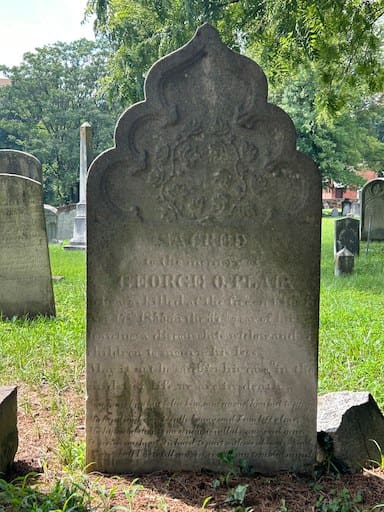
| Sacred to the memory of GEORGE O. PLAIN who was killed at the fire on King St. Nov. 17th, 1855, in the 37th year of his age leaving disconsolate widow and six children to mourn his loss. None knew him but to love him, none named him but in praise My head and stay is called away and I am left alone My husband dear to me so near, is called away and gone. It grieves my heart tis hard to part with one who was so kind Where shall I go to tell my woe and ease my troubled mind. |
S
John Slater (1811 – February 1, 1883): Award-Winning Horticulturist of Bellevue
John Slater was born in 1811 in Oundle, Northamptonshire, England, and emigrated to the United States. In 1840 he bought Bellevue Plantation, a historic estate probably built in the late 1780s. An accomplished horticulturist, he worked with William Yeates of Yeates Garden on Franklin Street in Alexandria.
At Bellevue, Slater introduced roses, dahlias and strawberries and kept a varied garden of rhubarb, asparagus, lettuce, peas and tomatoes. He also grew Bartlett pears and Catawba grapes.
During the Civil War, Slater gave strawberries to the Mansion House Hospital, which stood in front of the Carlyle House on North Fairfax Street. He also served as an election officer and as a Trustee of Public Schools.
Slater died on February 1, 1883, at the age of 72, and is buried in the Methodist Protestant Cemetery, Alexandria, VA. Bellevue remained in the Slater family for several generations until a powerful storm wrecked it in 1912. Marina Towers stands on the site today.
Today’s Slaters Lane follows the course of an older road that was the main route to Bellevue Plantation and possibly to the Dade plantation. The road takes its name from the Slater family.
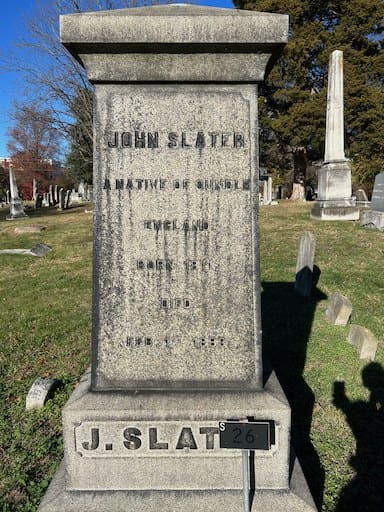
| JOHN SLATER a native of Oundle, England born 1811 died Feb. 1st 1883 J. SLATER |
T
Robert I. Taylor (1814 – November 17, 1855): Improved Order of Red Men Leader and Firefighter Killed in the Dowell China Shop Fire
Robert I. Taylor belonged to the Improved Order of Red Men, a fraternal order that traced its roots to the Sons of Liberty of the Revolutionary era. The order’s symbols are carved on his gravestone.
On the night of November 17, 1855, Taylor was one of the seven men killed while fighting the fire at the Dowell China Shop, at 215–217 King Street, with the Star Fire Company.
His name is carved on the Firefighters Memorial at the entrance of Ivy Hill Cemetery on King Street, along with those of James Keene, William Evans, George O. Plain, G. David Appich, J. Carson Greene and John Roach.


| Erected by War Eagle Tribe no. 22 I.O.R.M. To the memory of Past Sachem ROBERT I. TAYLOR was killed at the Fire on King St. November 17, 1855 Aged 41 Grand yrs. And is my husband gone My Children’s father fled And in his noble form Reposing with the dead We hope to meet in Heaven |
Y
Joseph H. Young (1823 – 1893): Alexandria’s First Paid Fire Department Driver
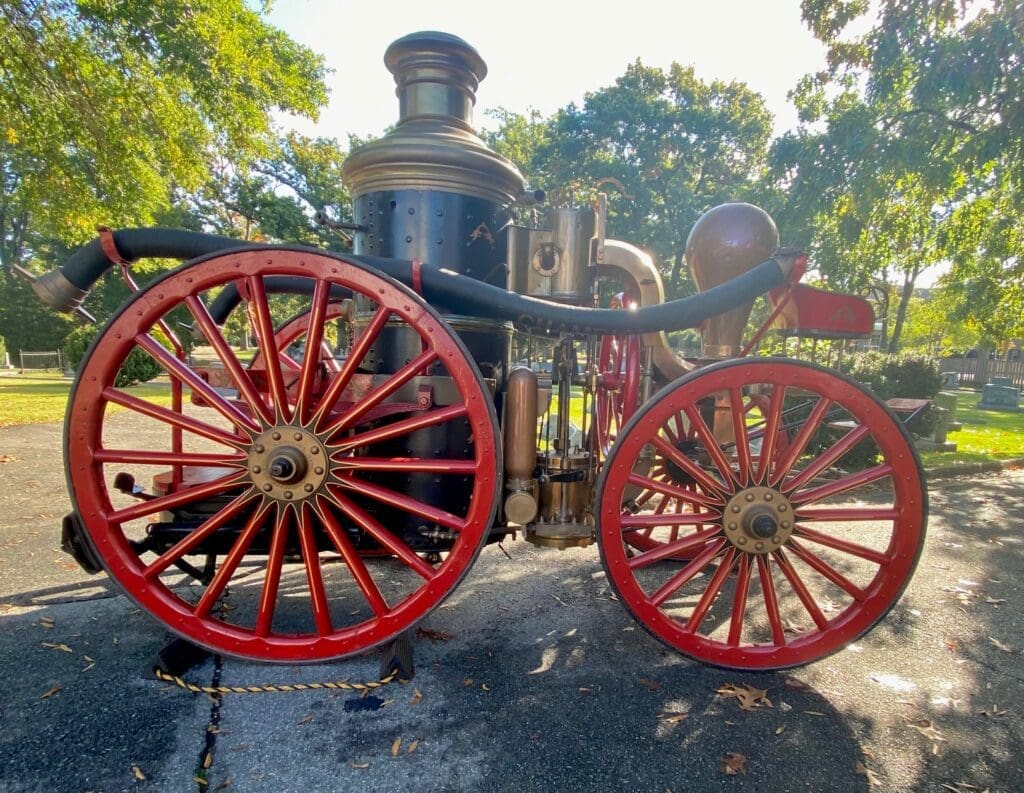
Joseph H. Young, a native of Philadelphia, made a lasting mark on Alexandria’s firefighting history. During the Civil War he served with distinction in the 11th New York Volunteer Infantry, better known as the Fire Zouaves, and ran one of two horse-drawn steam fire engines brought to Union-occupied Alexandria. Stationed near Fairfax and Princess Streets, they were the first steam fire engines the city had seen, and they marked a dramatic shift from hand-drawn, hand-pumped engines to far more efficient steam power.

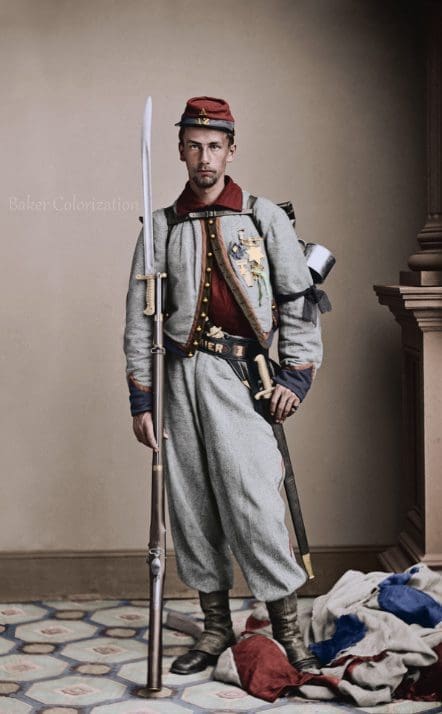
After the war, the city bought one of the engines and kept Young, known for his mechanical skill, as its engineer. He joined the Hydraulion Fire Company, founded in 1827 in response to the city’s great fire that year. In 1866 Young became Alexandria’s first paid fire department driver, living on Royal Street near the engine house.

Young’s career mixed dedication with personal struggles. He was removed from duty in 1880 on charges of drunkenness and vertigo, later worked as a guard, and was reinstated in 1884. In 1885, though accused of intemperance, he averted a potentially disastrous fire at Sarepta Hall during a Salvation Army meeting by putting out burning matchboxes scattered near a staircase. He was formally commended for faithful and efficient service in 1887 and 1889.


In May 1889, however, Mayor Downham found Young drunk while running the engine at a fire. The Alexandria Gazette reported that Young had “freely indulged in liquor on the occasion of yesterday’s celebration,” and he was dismissed the following month.
Joseph H. Young died of pneumonia on March 9, 1893, at age 69. His funeral showed how much he had meant to the fire service. Members of three fire companies took part, two from each serving as pallbearers, and his comrades turned the Hydraulion hose reel into a hearse and pulled it through the streets of Alexandria. He was buried in the Methodist Protestant Cemetery, Alexandria, VA, part of the Wilkes Street Cemetery Complex, a fitting resting place for one of the city’s first professional firefighters.
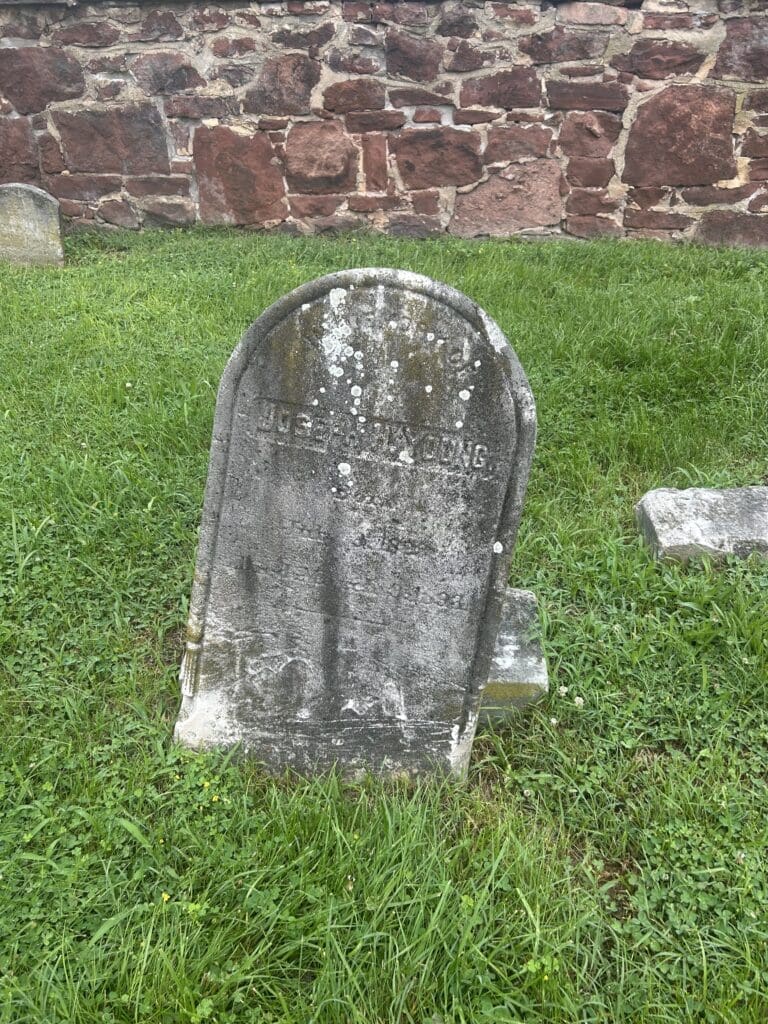
| In Memory of JOSEPH H. YOUNG Born July 9, 1823 Died March 9, 1893 |
Sources of Information
Beaman, G. A. (2026). Alexandria City Hall, Market Square, and Slavery (Alexandria Archaeology Publication 149). City of Alexandria.
Beaman, G. A. (2026, July 16). Gustavus Gibson. Out of the Attic. Office of Historic Alexandria. Retrieved from the City of Alexandria.
Greenly, M. (1996). Those Upon the Curtain Has Fallen: The Past and Present Cemeteries of Alexandria, VA. Alexandria Archaeology Publications.
Hakenson, D. C. (2011). This Forgotten Land Volume II, Biographical Sketches of Confederate Veterans Buried in Alexandria, Virginia. Self-published.
Pippenger, W. E. (2008). Tombstone Inscriptions of Alexandria, Virginia: Volume 2. Heritage Books, Inc.
Powell, M. G. (2000). The History of Old Alexandria, VA, from July 13, 1749 – May 24, 1861 (W. E. Pippenger, Index). Willow Bend Books.
Stowe, H. B. (1854). The Key to Uncle Tom’s Cabin. Jewett Publishing.
Wallace, L. A., Jr. (1990). 17th Virginia Infantry. H.E. Howard, Inc.
Wedderburn, A. J. (1907). Souvenir Virginia Tercentennial of Historic Alexandria, Va., Past and Present. Alexandria. Retrieved from the Library of Congress.
Weinraub, C. (2017). The Firefighter’s Memorial in Ivy Hill Cemetery, Alexandria, Virginia. The Alexandria Chronicle, Fall 2017. Alexandria Historical Society, Inc.
Page last updated: October 29, 2026