Born in 1851 in Alexandria, George W. Petty left an enduring mark on the city as a business owner, public servant, and firefighting hero. Though little is known about his early life, by 1876, Petty appears in the Alexandria City Directory as the proprietor of a saloon at the fish wharf, residing on Union Street near King.
Over the next several decades, Petty’s business—and his home—shifted locations across Alexandria’s busy downtown streets. In 1876, he moved to 19 South Union Street. By 1897, he was listed at 114 North Fairfax Street, and in 1907, both his residence and saloon were located at 120 North Royal Street, directly across from City Hall. The 1910 U.S. Census listed him as a restaurant proprietor, still actively working into his seventies.
Petty was married twice and had three children with his first wife, Margaret Ennis, who died in 1887. She is buried beside him at Bethel Cemetery, and today, both are memorialized with gravestones—a fitting tribute for a man who dedicated his life to the safety of his fellow Alexandrians.
A Legacy of Bravery
Petty’s greatest legacy was forged not behind a bar, but behind a hose line.
He began his firefighting career with the Sun Fire Company, though the exact date is unknown. After the Civil War, when that company dissolved, he joined Hydraulion, one of Alexandria’s volunteer fire companies. By 1876, he was listed as Foreman of Hydraulion, leading his crew through some of the city’s most dangerous fires.
A dramatic 1896 newspaper account captured his heroism during one major blaze:
“Geo. Petty, one of Alexandria’s most distinguished firemen, and foreman of the Hydraulion Engine Company, covered himself with glory. He was in the midst of the fire and smoke from start to finish… At 12:30 he came to the window and called to his chief that he had the fire subdued on that floor and wanted to go where he could find more to do… He was ordered to the fourth floor, where he worked with renewed energy” (The Evening Star, 1896, p. 7).
Known for his relentless spirit and clear-headed leadership under pressure, Petty often received public thanks for his actions. Letters of appreciation, published in the Alexandria Gazette, commended both his courage and his effective command. One letter read:
“We wish to thank you personally for the kind and proficient way in which you responded to our call for help yesterday, and want to compliment you for the capable way in which you handled your firemen and fought the fire” (Alexandria Gazette, 1911, p. 3).

In 1897, following the retirement of Edgar Warfield, Petty was elected Chief Engineer of the Alexandria Fire Department (Alexandria Gazette, 1897, p. 3).
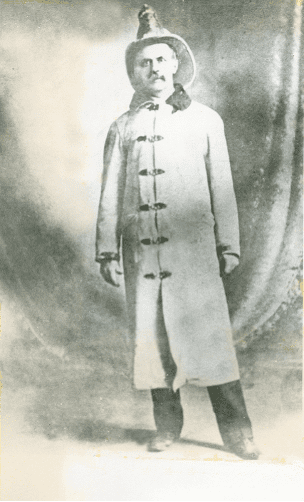
A Final Alarm
On April 15, 1911, Chief Petty responded to what would be his final call. While en route to a fire on South Henry Street, he collapsed suddenly from a heart attack. His fellow firemen believed he had merely fainted from exertion and rushed him to Alexandria Hospital in the Columbia Company’s hose wagon. But it was too late.
At the time of his death, Chief Petty became the first Alexandria firefighter to die in the line of duty since the catastrophic fire of 1855, which claimed seven lives.
“The funeral cortege was followed by more than 200 firemen in uniform from the several local companies, and thirty-five firemen of the Washington fire department… The casket was placed on a reel of the Reliance Company, drawn by about fifty firemen. Behind it came the dead chief’s horse and carriage, led by a fireman. The carriage contained the chief’s helmet, fire coat and boots, and was appropriately draped in mourning” (Washington Herald, 1911, p. 4).
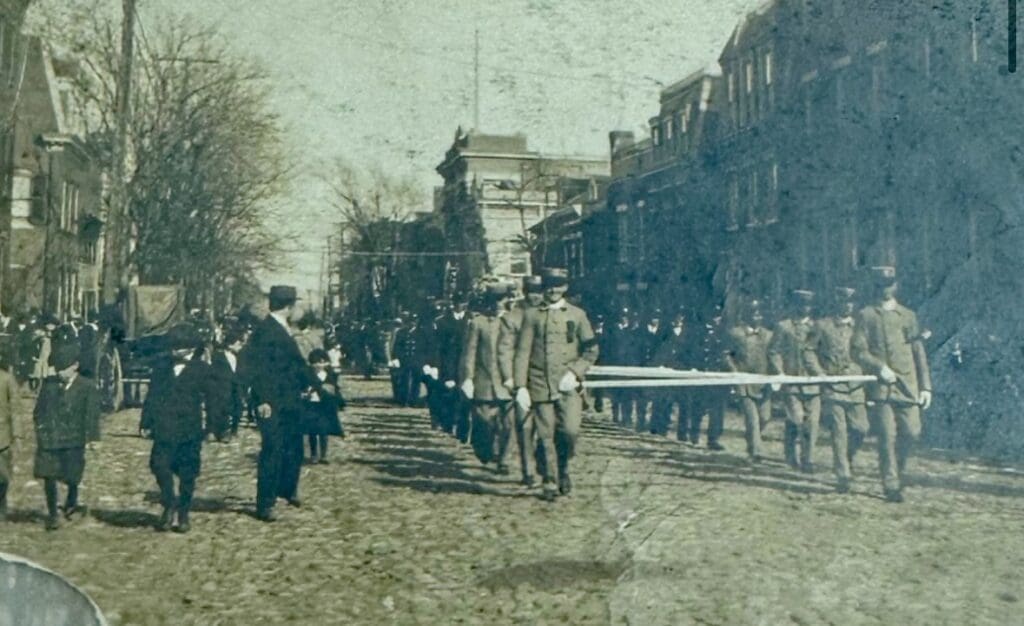
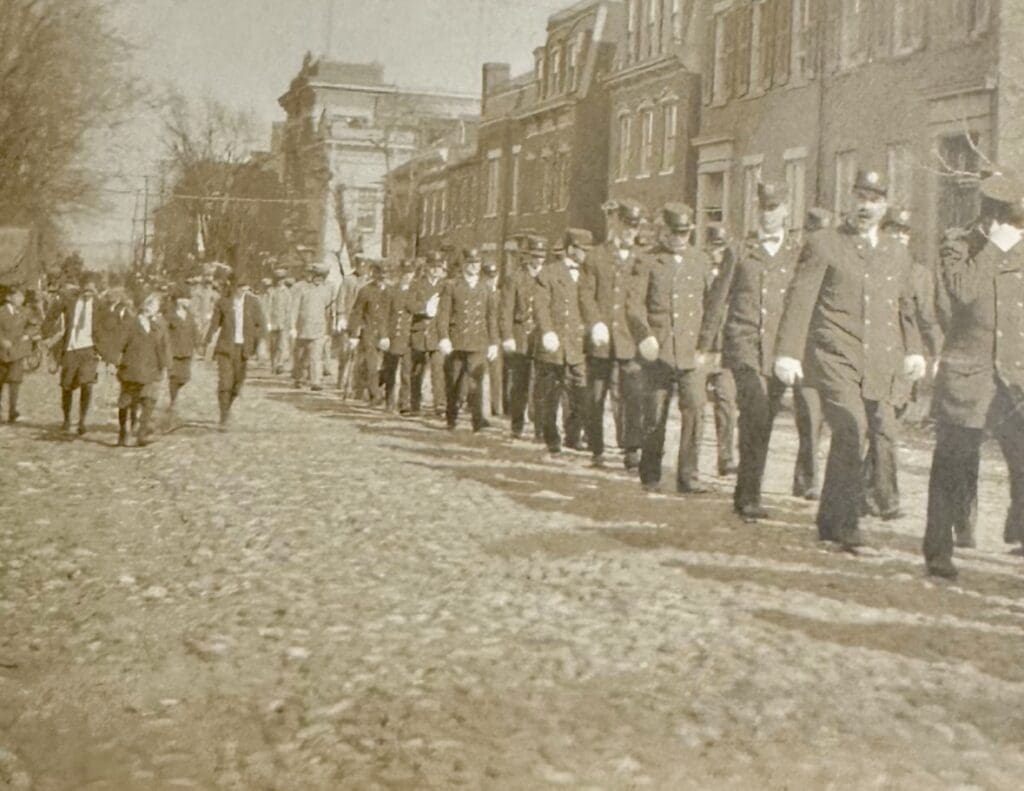
George Petty’s life was defined by service. He was a native Alexandrian, a devoted public servant, and a firefighter until the very end.
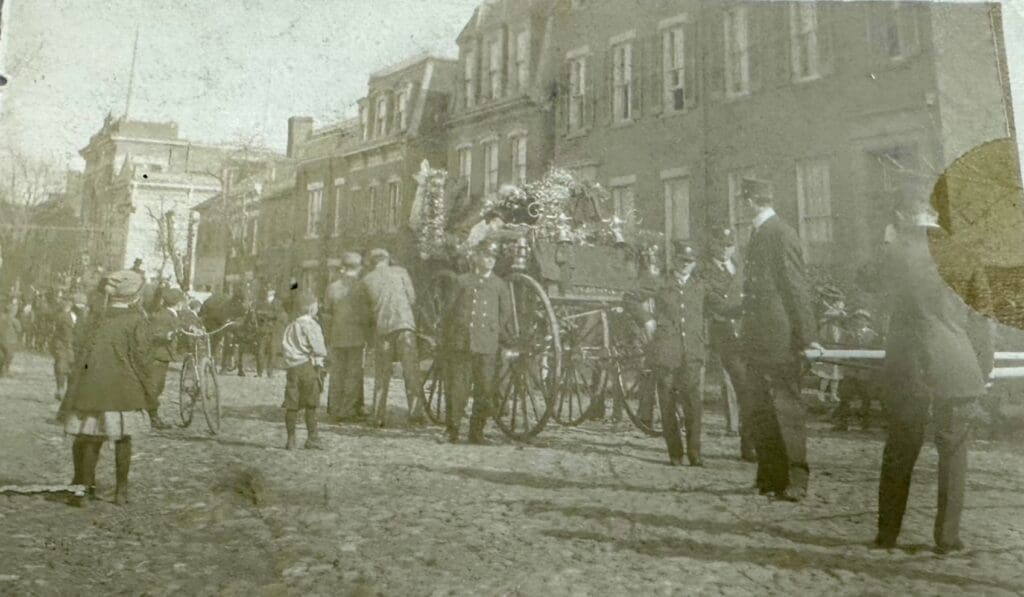
Honoring His Memory
Today, visitors to Bethel Cemetery can pay their respects at the gravesite of Chief George W. Petty, where a long-overdue gravestone now marks the final resting place of one of Alexandria’s most distinguished firemen.

His name also lives on in the city’s firefighting legacy—remembered not only for the blazes he battled, but for the leadership, humility, and courage he carried with him into every fire.
🔥 Want to Learn More?
Visit our Interactive Map of Fallen Firefighters in Alexandria, VA to explore the city’s firefighting history and locate the gravesites of local firefighting heroes—including Chief George W. Petty.
References
Alexandria Gazette. (1897, July 14). Fire wardens. p. 3.
Alexandria Gazette. (1911, March 14). A just recognition. p. 3.
The Evening Star. (1896, September 10). The big fire yesterday and the estimated losses. p. 7.
The Washington Post. (1911, April 16). Drops dead at fire. p. 19.
Washington Herald. (1911, April 19). p. 4.