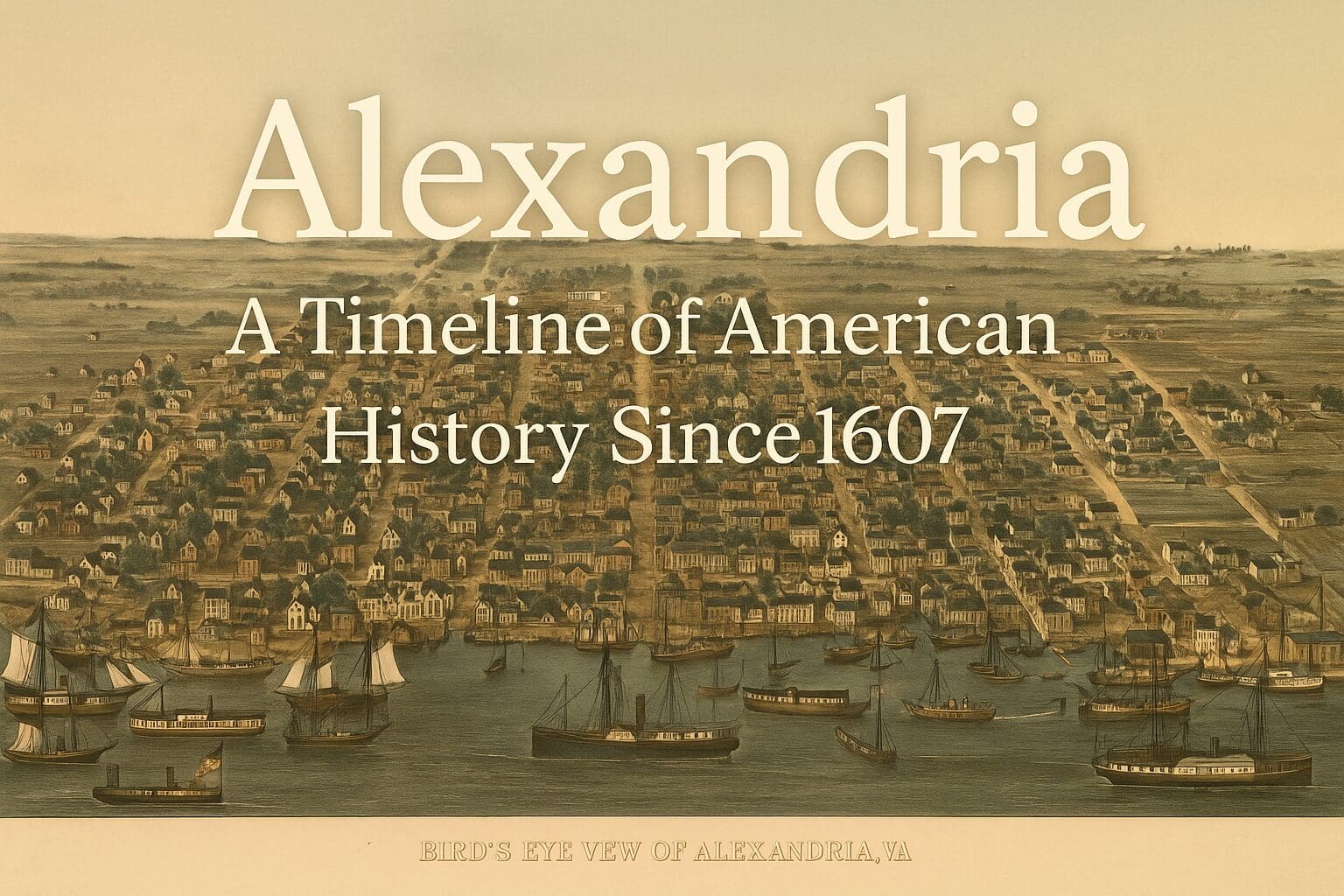
Welcome to the Alexandria History Timeline — This living timeline offers a continuous journey through the city’s past, shaped by both local milestones and global events. From the political and religious upheavals of colonial Virginia to Alexandria’s role in revolution, war, and civil rights, the entries reflect the people, places, and turning points that have defined our community across nearly three centuries.
What makes this timeline unique? Each story is grounded in original research and tied to individuals buried in Alexandria’s historic cemeteries—linking public memory to private lives. Many entries lead to in-depth articles, burial profiles, or firsthand discoveries shared through Gravestone Stories, where we believe every grave holds a voice worth hearing.
How to use the timeline: Scroll decade by decade, or jump to a particular era. Click any entry to explore its full context. New stories are added regularly.
Featuring more than 130 stories—and growing—this timeline highlights Alexandria’s role in the larger American story. Each entry connects local lives to national events, creating a unique archive that blends scholarship, storytelling, and preservation.
Created and curated by a local public historian and cemetery steward, this timeline is part of an ongoing effort to preserve Alexandria’s past and share it with future generations.
On December 27, 1864, 443 African American soldiers recovering at Alexandria’s L’Ouverture Hospital signed a powerful petition protesting segregated burial practices. The catalyst was the burial of Private Shadrach Murphy in the Freedmen’s Cemetery instead of the nearby Alexandria National Cemetery. The soldiers wrote, “We are not contrabands, but soldiers…
Read More
On April 9, 1865, General Robert E. Lee surrendered to Ulysses S. Grant at Appomattox Court House, effectively ending major combat in the Civil War. Wilmer McLean, whose homes witnessed both the beginning and end of the war, is later buried in Alexandria’s St. Paul’s Cemetery. ☛ Read More Wilmer…
Read More
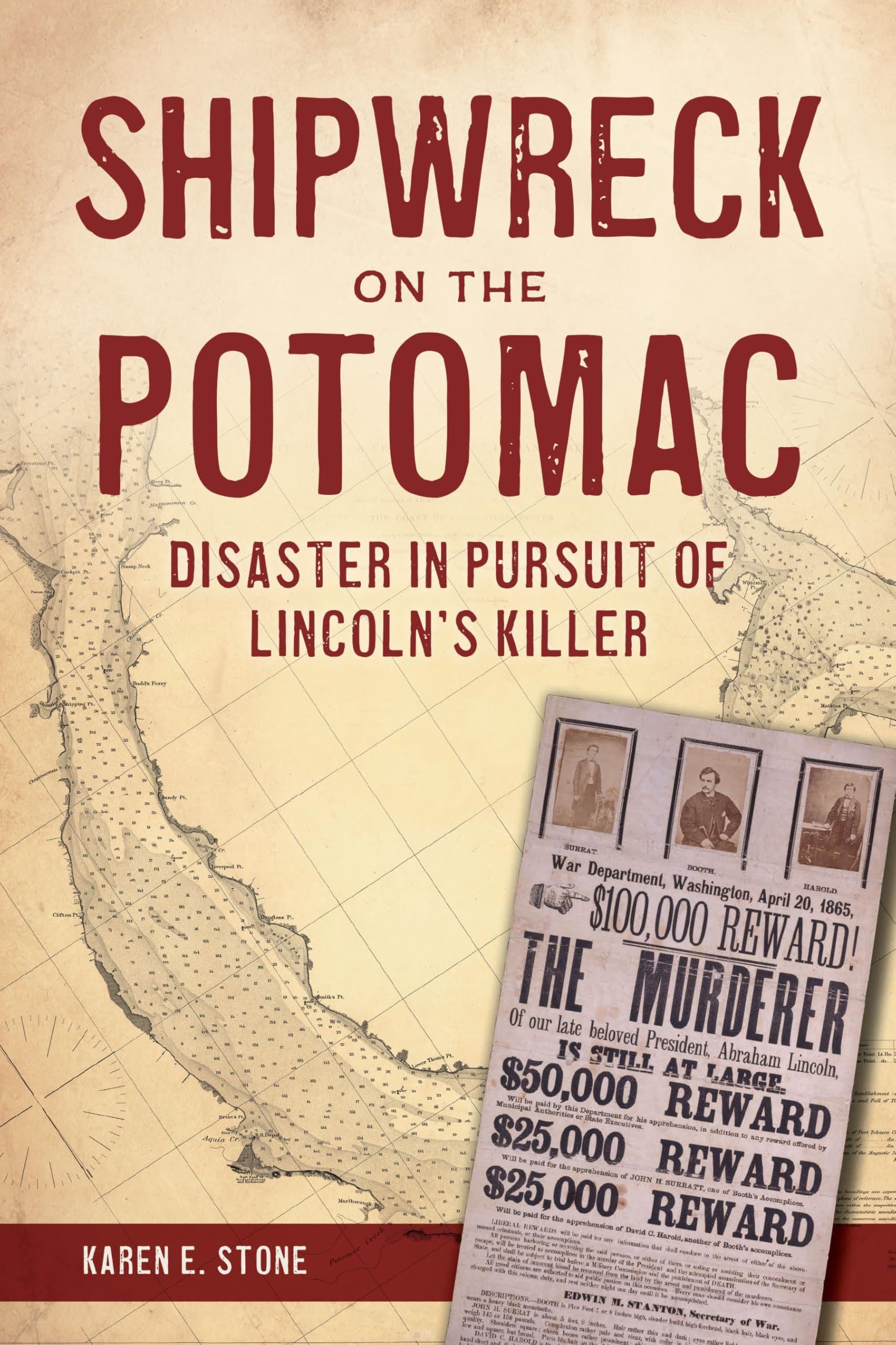
Just days after President Lincoln was shot, a lesser-known tragedy unfolded on the Potomac River. In the early morning of April 24, 1865, a military transport steamer, the Massachusetts, accidentally collided with the barge Black Diamond, which had been stationed to help block the escape route of Lincoln’s assassin, John…
Read More
After over four years of continuous Union military control, Alexandria’s military occupation ends on September 22, 1865, when the city’s night watch resumed their rounds—the first time since May 24, 1861. This symbolic return of civilian authority marked the true end of Alexandria’s unique Civil War experience as both the…
Read More
Months after General Robert E. Lee surrendered at Appomattox, his nephew, Confederate naval officer Sydney Smith Lee, Jr., was still at sea aboard the CSS Shenandoah, targeting Union whaling ships in the Pacific. Unaware the war had ended, the crew only learned the news in August 1865 from a British merchant vessel.…
Read More
After the Civil War, Alexandria’s cemeteries gradually expanded existing grounds to accommodate continued burials. No new cemeteries were formally established for two decades. Congregations added sections to existing burial grounds within the Wilkes Street Cemetery Complex, adapting to the city’s slow postwar recovery.
“Let no neglect, no ravages of time, testify to the present or to the coming generations that we have forgotten as a people the cost of a free and undivided republic.”— General John A. Logan, Grand Army of the Republic, 1868 On this date, Alexandria joined the nation in observing…
Read More
Montgomery Dent Corse—Alexandria native, banker, and commander of the 17th Virginia Infantry during the Civil War—was seriously injured during the catastrophic collapse of the Virginia State Capitol in Richmond. On April 27, 1870, the floor of a packed courtroom gave way during a contested election hearing, plunging spectators into the…
Read More
On May 19, 1871, fire swept through Alexandria’s City Hall, consuming the building that housed the city’s government and destroying one of early America’s architectural treasures. Benjamin Latrobe’s historic 1817 steeple design—a graceful monument to Federal-era craftsmanship—was lost forever in the blaze. Latrobe, who also designed the U.S. Capitol and…
Read More
Nicholas Trist, once Thomas Jefferson’s ward and later his grandson-in-law, played a pivotal role in shaping the modern United States. As chief negotiator of the Treaty of Guadalupe Hidalgo in 1848, Trist defied presidential orders to abandon negotiations—ultimately securing more than 500,000 square miles of territory for the United States,…
Read More
Holmes Paulding, a U.S. Army surgeon later buried in St. Paul’s Cemetery, plays a pivotal role following the Battle of the Little Bighorn. Paulding helps recover, identify, and rebury the fallen soldiers of Custer’s command after the devastating defeat. ☛ Read More
In 1879, the Daughters of the Confederacy oversaw the disinterment of Confederate prisoners of war from Alexandria’s Soldiers’ Cemetery. Their remains are moved to a mass grave at Christ Church’s burial ground, reflecting postwar efforts to honor Confederate dead separately from Union soldiers.
On this day in 1881, Clara Barton founded the American Red Cross—a humanitarian force that would forever change the way the world responds to crisis. But what many don’t know is that Barton’s tireless mission was supported by a trusted aide from right here in Alexandria, Virginia. Lucy Mariah Graves,…
Read More
On November 13, 1885, Alexandria’s Black Baptist community establishes a burial ground west of Hooff’s Run, near present-day Holland Lane. The cemetery provides a dedicated resting place for African American Alexandrians during an era when segregation extended even into death. Today, its surviving grounds are preserved as part of the…
Read More
On December 15, 1885, the Virginia General Assembly incorporates the Bethel Cemetery Company. Stockholders purchase land within the Wilkes Street Cemetery Complex to create Alexandria’s first cemetery designed for elaborate monuments and mausoleums, reflecting new 19th-century memorial styles.
Named for abolitionist Frederick Douglass, Douglass Cemetery is founded within the Wilkes Street Cemetery Complex to serve Alexandria’s African American community. The cemetery reflects the civic growth of Black Alexandrians during an era of increasing segregation.
Disaster struck Alexandria’s waterfront when fire began at the nearby Herbert Bryant Fertilizer Company and quickly spread to the massive Pioneer Mills complex. Once the largest steam flour mill in the United States, the enormous facility had towered over Alexandria’s waterfront since 1854, symbolizing the city’s industrial might and its…
Read More
On February 1, 1900, Minna and Ada Everleigh opened the Everleigh Club in Chicago’s Levee District. Opulent, exclusive, and notorious, it became the most talked-about brothel in America—frequented by millionaires, dignitaries, and politicians. But by 1911, national reformers forced its closure, ending the sisters’ reign over Chicago’s red-light empire. Aida…
Read More
In 1915, Alexandria annexed more than 1,300 acres from Fairfax and Alexandria Counties, incorporating the Wilkes Street Cemetery Complex formally within city limits. Previously, the complex had been located just outside the old boundary of the District of Columbia.
Alva Harvey, later buried in the Presbyterian Cemetery, participated in the U.S. Army Air Service’s First World Flight, the first aerial circumnavigation of the globe. His legacy as a pioneering aviator endures within Alexandria’s rich historical fabric. ☛ Read More Douglas World Cruiser floatplane
In 1929, the National Society of the Children of the American Revolution erected the Tomb of the Unknown Soldier of the American Revolution within the 18th-century burial ground of the Old Presbyterian Meeting House. The tomb honors an unidentified patriot whose remains were unearthed nearby in 1826 during the construction…
Read More
In 1933, Alexandria’s Agudas Achim Congregation established a new Jewish cemetery west of the original Wilkes Street Cemetery core. This reflects the growth of Alexandria’s Eastern European Jewish community and the expanding religious diversity of the city in the early 20th century.
As Alexandria grows rapidly after World War II, concerns emerge about the condition and future of the historic Wilkes Street Cemetery Complex. Families and congregations organize early preservation efforts, laying the groundwork for the protection of these irreplaceable burial grounds.
The armistice ending active combat in the Korean War was signed on July 27, 1953, halting a brutal three-year conflict that claimed over 3 million lives—including 33,000 American soldiers. Though it brought a ceasefire to the Korean peninsula, the war itself technically remains unresolved to this day. While we honor…
Read More
Four years after retiring as president of the United Mine Workers, John L. Lewis received the Presidential Medal of Freedom from President Lyndon B. Johnson. The nation’s highest civilian honor recognized Lewis as “an eloquent spokesman of labor” who had “given voice to the aspirations of the industrial workers of…
Read More
On September 6, 2014, Alexandria officially dedicated the Contrabands and Freedmen’s Cemetery Memorial.Rediscovered during historical research in the 1990s, the cemetery had long been lost beneath modern development. Archaeological investigations confirmed over 1,700 burials of formerly enslaved individuals and African American refugees who died during the Civil War. Today, the…
Read More
Julius Campbell, Jr. was a star defensive lineman at T.C. Williams High School during Alexandria’s early years of school integration. As a leader of the 1971 undefeated team that won the Virginia AAA state championship, Campbell’s courage helped bridge deep racial divides. His story was immortalized in the 2000 Disney…
Read More
The Wilkes Street Cemetery Complex in Alexandria is the most historic cluster of cemeteries in the United States—home to over 35,000 burials spanning from the colonial era to the present day. These sacred grounds reflect America’s unfolding story through revolution, war, public health crises, civil rights, and local legacy. Learn…
Read More
On May 25, 2024, former President Barack Obama made a quiet and powerful visit to the Alexandria National Cemetery, joining local volunteers for the annual “Flags-in-Ground” ceremony held the Saturday before Memorial Day. During the event, American flags and flowers—donated by The National Memorial Day Flowers Foundation—were placed at all…
Read More
In 2024, historian David Heiby led the rediscovery of Col. George Gilpin’s grave, a Revolutionary War officer and pallbearer at George Washington’s funeral. Gilpin’s grave had been lost for over 200 years, and its rediscovery adds a significant chapter to Alexandria’s rich historical narrative. 👉Read More Here