Before dawn on January 18, 1827, flames erupted inside the Green Furniture Factory on Royal Street, just as workers returned from their breakfast break. The fire spread rapidly, igniting what would become the most destructive blaze in Alexandria’s early history.
The factory was established by English immigrants William Green and his son James Green (1801–1880), who arrived in America in 1817 and built a thriving cabinet-making business. Under James’s leadership, the company relocated to Royal Street in 1824 and became one of the city’s largest manufacturing operations. The warehouse that caught fire that morning would later be repurposed as a Civil War prison.
The destruction was staggering. On Fairfax Street, flames consumed the homes of the Wise, Green, and Stabler families. Prince Street was hit even harder: entire blocks—including the historic 100 block of Captain’s Row—were obliterated. Warehouses and homes belonging to the Vowell, Fitzhugh, Fowle, and Smoot families were lost. In total, 53 buildings were destroyed, with damages exceeding $107,000.
Alexandria’s fire companies responded swiftly, but the scale of the disaster required reinforcements. Over 300 Navy Yard employees, including enslaved laborers like Michael Shiner, joined the fight. Their combined efforts prevented even greater loss. Aid poured in from across the region, including $20,000 from Congress to support displaced families.
Though the fire began in his warehouse, James Green would emerge as one of Alexandria’s most prominent 19th-century figures. In 1848, he purchased the Old Bank Building at Fairfax and Cameron and transformed it into the Mansion House Hotel, the city’s largest. During the Civil War, it was seized by the Union Army and converted into a hospital—while his former furniture factory became a military prison.
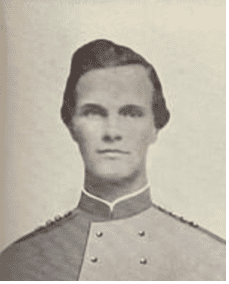
This chapter of Green’s life inspired the PBS historical drama Mercy Street (2016–2017), which was loosely based on his family and their experiences during the war. His daughter, Emma Green, featured prominently in the series, would later marry Benjamin Franklin “Frank” Stringfellow, a daring Confederate spy and scout for J.E.B. Stuart and Robert E. Lee. Small in stature but legendary in reputation, Stringfellow conducted dangerous missions behind enemy lines, including espionage stints in Alexandria and Washington disguised as a dental assistant. After the war, he returned to Alexandria, became an Episcopal priest, and served as a chaplain in the Spanish-American War. He and Emma are buried together at Ivy Hill Cemetery.
James Green died in 1880 and is buried at Ivy Hill Cemetery, leaving behind a complex legacy shaped by industry, war, and resilience. The Great Fire of 1827 was only the first of many trials he and the city would endure—and overcome.