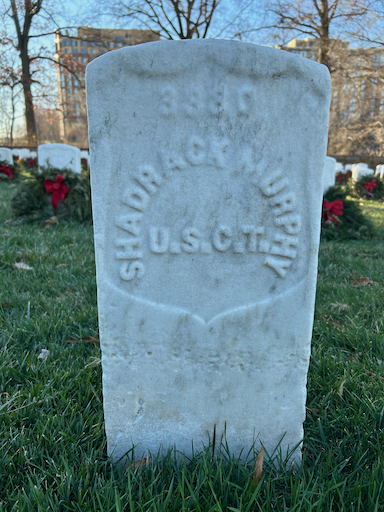
On December 27, 1864, 443 African American soldiers recovering at Alexandria’s L’Ouverture Hospital signed a powerful petition protesting segregated burial practices. The catalyst was the burial of Private Shadrach Murphy in the Freedmen’s Cemetery instead of the nearby Alexandria National Cemetery. The soldiers wrote, “We are not contrabands, but soldiers of the U.S. Army… and should share the same privileges and rights of burial… with our fellow soldiers who only differ from us in color.”
This protest—arguably one of the earliest organized civil rights actions in American history—was rooted in the wartime valor of the United States Colored Troops (USCT). Many of the petitioners had recently fought at the Battle of the Crater, and more than 300 wounded USCT were treated in Alexandria following the battle.
Their petition succeeded. Between January 6–17, 1865, 118 USCT soldiers were reinterred in Alexandria National Cemetery, including Murphy.
One of the petition signers, Paul Sandridge—an ancestor of actor Laurence Fishburne—survived the war and went on to build a life in Ohio. His signature on the L’Ouverture Hospital petition links him to this landmark civil rights moment. The reinterred grave of Shadrach Murphy remains a powerful reminder of the fight for dignity in death as well as in life.