Four years after retiring as president of the United Mine Workers, John L. Lewis received the Presidential Medal of Freedom from President Lyndon B. Johnson. The nation’s highest civilian honor recognized Lewis as “an eloquent spokesman of labor” who had “given voice to the aspirations of the industrial workers of the country.”
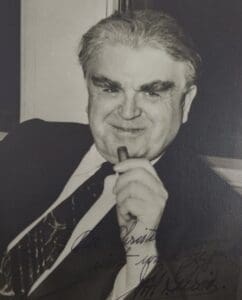
Lewis received this recognition while living in Alexandria’s Lee-Fendall House at 614 Oronoco Street, where he had resided since 1937. His wife Myrta had purchased the historic home for $27,000 from neighbor Mai Downham, making a strategic choice that elevated organized labor’s social standing. Despite his working-class roots, Lewis lived like a businessman—wearing three-piece suits, driving a Cadillac, and maintaining membership in the exclusive Cosmos Club.
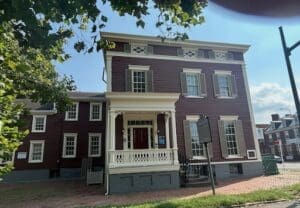
Throughout his 32-year residence, Lewis respectfully preserved the home’s 18th-century character while making practical improvements like an electric lift and updated kitchen. After Myrta’s death in 1942, daughter Kathryn became his secretary while chauffeur James Lewis managed the household. Despite his national prominence, the family faced local resistance—they were excluded from Alexandria house tours due to anti-union sentiment.
Lewis died in the Lee-Fendall House in 1969 at age 89, five years after receiving the Presidential Medal of Freedom. His Alexandria residence connected one of America’s most powerful labor leaders to a home that had witnessed Revolutionary diplomacy, Civil War hospital service, and 20th-century labor activism—demonstrating how the historic house continued to attract nationally significant figures across centuries.