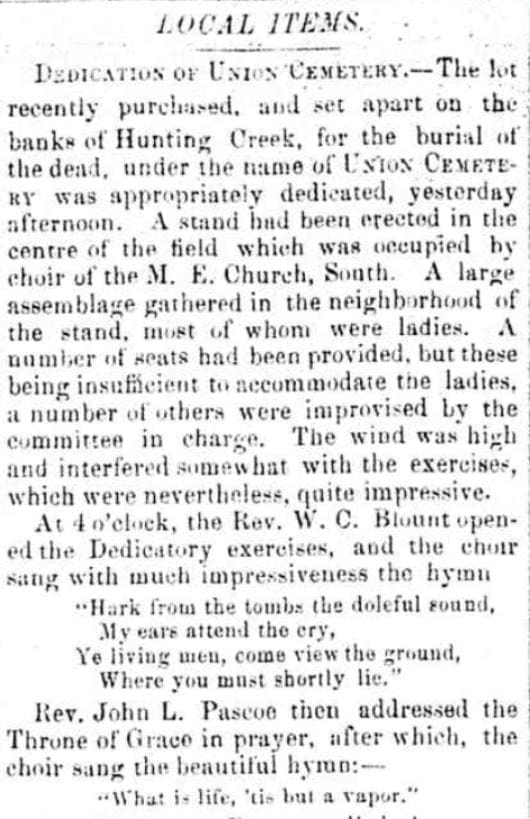
Union Cemetery Alexandria Virginia, originally known as The Union Cemetery of the Methodist Episcopal Church South, has been an integral part of the city’s history since 1860. This significant burial ground in Alexandria, Virginia, was dedicated on Wednesday, September 12, 1860, by church members, the choir, and the Mount Vernon Guards after a long sermon by the Reverend William Blount. Union Cemetery Alexandria Virginia marks an important milestone in the city’s religious and social landscape during a tumultuous period in American history.
Historical Background of Union Cemetery Alexandria Virginia
The Methodist Episcopal Church South
The cemetery’s origins are deeply rooted in the Methodist Church schism of 1844. This split led to the formation of the Methodist Episcopal Church South, which established Union Cemetery Alexandria Virginia. The division reflected the broader societal tensions of the time, particularly surrounding the issue of slavery.
Dedication Ceremony
On September 12, 1860, Union Cemetery Alexandria Virginia was dedicated in a ceremony led by Reverend William Blount. Church members, the choir, and the Mount Vernon Guards attended the event after a long sermon by Reverend Blount. The local newspaper, the Alexandria Gazette and Virginia Advertiser, covered the dedication, noting that “the wind was high and interfered somewhat with the exercises, which were, nevertheless, quite impressive.”
The Methodist Schism and Union Cemetery Alexandria Virginia
The establishment of Union Cemetery Alexandria Virginia was a direct result of the broader conflicts within the Methodist denomination:
- In 1844, a schism developed within the Methodist denomination over slavery.
- By May 1845, the denomination had split into three separate churches:
- The Methodist Episcopal (North), which opposed slavery
- The Methodist Episcopal Church South, formed by pro-Southern churches
- The Methodist Protestant
- These denominations remained separated until 1939 when they reunified to form the Methodist Church we know today.
Washington Street United Methodist Church and Union Cemetery Alexandria Virginia
The Washington Street United Methodist Church, closely tied to Union Cemetery Alexandria Virginia, has its own fascinating history:
- In 1849, members broke away from Trinity United Methodist (established 1774) to form their own church.
- The new congregation aligned with the Methodist Episcopal Church South.
- They initially met in a building across from Trinity’s sanctuary on Washington Street.
- After a legal battle over property rights, they built their own sanctuary in September 1850.
- This building on Washington Street is still in use today.
Trinity United Methodist Church’s cemetery, which dates to 1809, is located in the 1400 block of Wilkes Street, just east of the Alexandria National Cemetery. This older cemetery illustrates the long-standing presence of Methodist congregations in Alexandria, predating the establishment of Union Cemetery Alexandria Virginia by over 50 years.
Current Status of Union Cemetery Alexandria Virginia
Union Cemetery Alexandria Virginia remains an active burial ground, now operated by James Click, who also manages Bethel and Little Bethel cemeteries. Some key facts about the cemetery:
- It’s part of the Wilkes Street Cemetery Complex.
- Little Bethel, originally part of Union Cemetery, was sold to Click’s father in the 1980s.
- There are more than 3000 burials in the Washington Street United Methodist Church Cemetery.T
- The cemetery continues to serve the community, preserving Alexandria’s rich history and Methodist heritage.
Today, Union Cemetery Alexandria Virginia continues to serve as a vital historical landmark. It not only preserves the memory of Alexandria’s Methodist heritage but also provides a tangible link to the city’s Civil War era history. Visitors to Union Cemetery Alexandria Virginia can explore the rich tapestry of local legends and historical narratives that make this site a unique part of Alexandria’s cultural landscape.
Notable Burials
Gladys Quander Tancil (1921–2002) Mount Vernon Interpreter and Pioneer in Telling the Stories of the Enslaved
Gladys Quander Tancil was a pioneering interpreter at George Washington’s Mount Vernon and an important figure in the preservation and public telling of African American history. A descendant of the Quander family, whose roots at Mount Vernon reached back to people enslaved there by George Washington, she brought rare personal depth and authority to her work. After retiring from more than three decades in government service, she joined Mount Vernon in 1975 as its first African American female guide and later helped lead interpretation focused on the lives of the enslaved people who lived and labored on the estate.
In 1995, Tancil gave the first “Slave Life” tour at Mount Vernon, drawing on both historical research and family memory to help visitors better understand the people whose stories had long been minimized. Her work helped broaden the estate’s interpretation and made her a respected pioneer in public history. Active in civic and church life as well, she was a member of Alfred Street Baptist Church for more than seventy years and was later honored by the Virginia legislature for educating generations of visitors. Her legacy remains part of Alexandria’s continuing story of preservation, interpretation, and African American history.
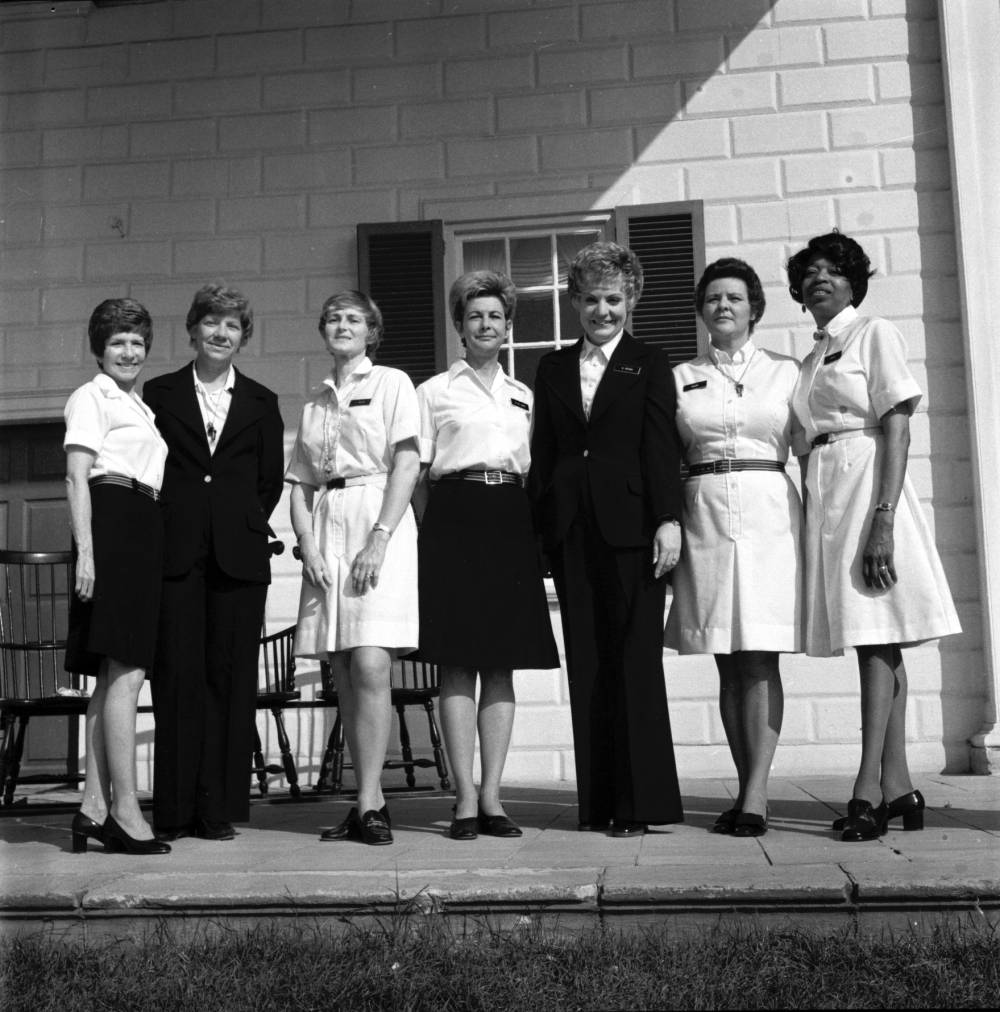
Gladys Quander Tancil (far right) with fellow Mount Vernon docents. Image courtesy of the Mount Vernon Ladies’ Association Archives, shared by Amanda Roper, Research Fellow at the George Washington Presidential Library at Mount Vernon.
If you have information about individuals buried in Union Cemetery in Alexandria, Virginia, or stories related to its history, we welcome your contributions. Please get in touch with us to share your knowledge and help preserve the rich heritage of this historic burial ground.
Learn More and Visit Union Cemetery Alexandria, Virginia
To learn more about Union Cemetery in Alexandria, Virginia, or to join a guided walking tour of this historic burial ground and other Alexandria cemeteries, please visit our Tours page or contact us directly.
Sources of Information
Hedman, K. P. (Ed.). (1974). Reflections 1849 – 1974. Washington Street United Methodist Church.
Pippenger, W. E. (2008). Tombstone inscriptions of Alexandria, Virginia: Volume 2. Heritage Books.