Private Charles W. Needham is buried in Section A, Site 875, at the Alexandria National Cemetery. He suffered a fatal head injury during the Battle of Aldie, in a charge led by Captain Charles Francis Adams, the grandson and great-grandson of two American Presidents. Private Needham served in the 1st Massachusetts Cavalry and enlisted at 24 in Georgetown, Massachusetts, on August 7, 1862. If you’d like to learn more about the Battle of Aldie, you can visit this link: Battle of Aldie.
June 17, 1863, Battle of Aldie
On June 17, 1863, soldiers from Massachusetts clashed with troops from Fitzhugh Lee’s Virginia cavalry brigade, commanded in this engagement by Thomas Mumford, during the opening phase of the Gettysburg Campaign. Fitzhugh Lee’s father, Sydney Smith Lee—a distinguished U.S. Navy officer and prominent member of the Lee family—is buried in Christ Episcopal Cemetery, not far from Needham (read more about Lee here). After a four-hour battle, Mumford’s forces were driven back, resulting in a Union victory. The 1st Massachusetts Cavalry, however, suffered significant losses: of the 294 men engaged, 167 were casualties—20 killed, 57 wounded, and 90 captured (Crowninshield, A History of the First Regiment of Massachusetts Cavalry Volunteers, Houghton Mifflin, 1891, p. 469).
Wounded were transported to Alexandria over the Orange & Alexandria Railroad.
Among the injured was Major Henry Lee Higginson, who would go on to found the Boston Symphony Orchestra in 1881 (read more about the BSO’s history). After the fight, Higginson, Needham, and the other wounded members of the 1st Massachusetts Cavalry were transported to Alexandria aboard a United States Military Railroad train, traveling along the Orange & Alexandria Railroad tracks.
“The train jerked us to and fro, and we got into Alexandria about one or two o’clock in the morning, were taken out by a lot of young men, who acted as if they were on a picnic, and who got us into ambulances with many jokes, and at last we were carried to a hospital, and got to bed somewhere. I had a little straw mattress with a deep hollow in the middle. It was a great relief, but still was very bad to lie on, for I could lie only on one side, one shoulder being hurt, the back of my head being hurt, and my back being hurt, and, on the other side, my face being cut. Our wounds were dressed, and I found in the morning, lying next to me Dr. John Perry, whose leg had been broken by a kick of his horse. On my other side lay our lieutenant, who had considerable morphine to relieve his pain and who would sit up in bed and eat peanuts. I knew that he had been shot through the side, and I watched to see them come out, but none of them came.”
—Major Henry Lee Higginson, describing his evacuation after the Battle of Aldie, June 1863 (source: Letters of Henry Lee Higginson, reprinted on dragoon1st.tripod.com)

The Orange & Alexandria Railroad was established in 1848 to connect Alexandria and Charlottesville. Construction began in 1850 and was finished in April 1854. It joined with the Virginia Central Railroad in Orange County. During the Civil War, the U.S. Military Railroad took control of this highly contested railway in Virginia. In 1870, the O&A merged with Manassas Gap, forming the Orange, Alexandria & Manassas Railroad. When soldiers arrived at the U.S. Military Railroad Hospital in the railway yard, they were taken to one of the city’s more than 30 hospitals, hoping they would recover from their injuries.

The Lee-Fendall House Hospital
Needham was sent to the Lee-Fendall House on Oronoco Street, where he died on June 30, 1863. The Lee-Fendall House was a hospital that was a part of the Grosvenor Military Hospital located at 414 N. Washington Street during the later part of the war. According to records in the National Archives, 87 Union soldiers died in The Lee-Fendall House while it was being used as a hospital between 1863 and 1865. The house was also where the first successful blood transfusion occurred in the United States. Edwin Bentley, the Chief Surgeon of the Military Hospitals in occupied Alexandria, used the house as his quarters.
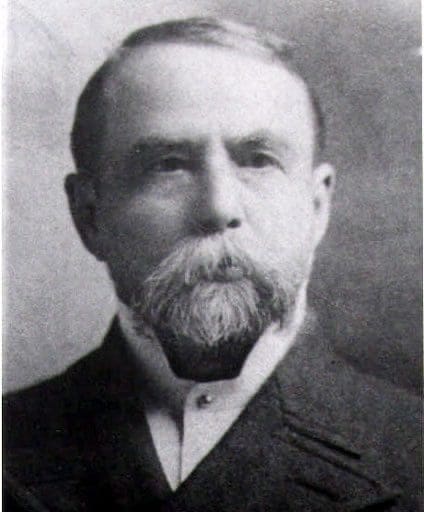
The first regimental Union Monument erected on a Southern battlefield
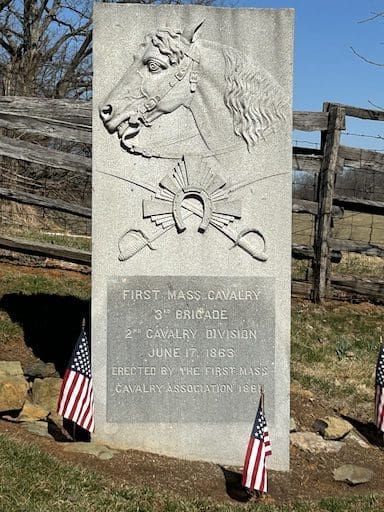
On June 17, 1891, soldiers who fought in the 1st Massachusetts met on the Aldie Battlefield to dedicate a monument to remember those who died or were severely hurt 28 years beforehand. The monument was put there in 1888, but it wasn’t until 1891 that there was a special event to celebrate it. This was the first monument put up by Union soldiers on a battlefield in the South. On the west side is the name of Charles Needham, who died in the Lee-Fendall House in June 1863 and now rests in peace in the Alexandria National Cemetery.
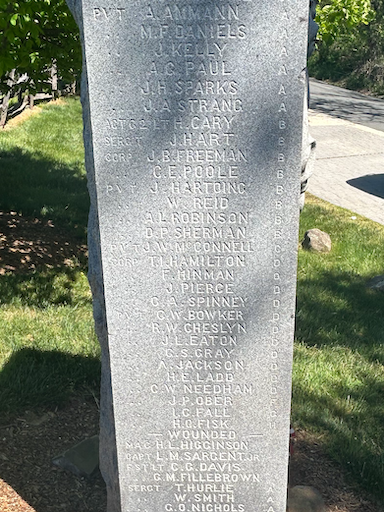
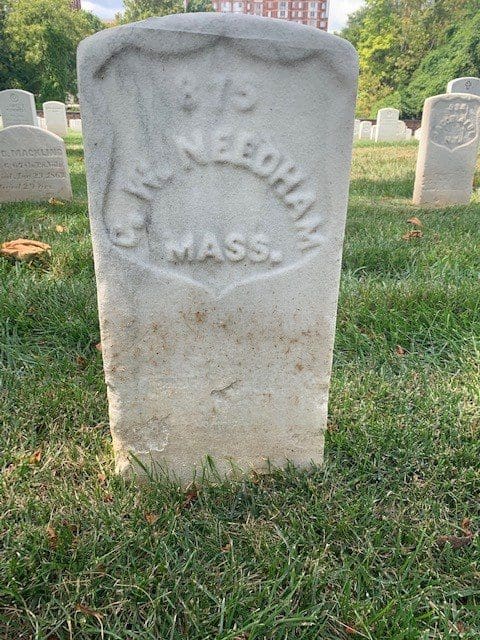
Sources of Information
Crowninshield, B. W. (1891). A history of the First Regiment of Massachusetts Cavalry Volunteers. Houghton, Mifflin, and Company.
Higginson, H. L. (1863). Letters of Henry Lee Higginson. Reprinted on Dragoon1st.tripod.com. https://dragoon1st.tripod.com/cw/files/hlh_aldie.html
The Mosby Heritage Association. (2017). Raised from obscurity: A driving tour of the cavalry battles of Aldie, Middleburg, and Upperville, June 17–21, 1863.
Visit Loudoun County. (n.d.). Virginia Civil War Trails. https://www.visitloudoun.org/listing/virginia-civil-war-trails/367/