August 2025 – Lost Alexandria firefighter from deadly 1855 fire finally found using ground-penetrating radar in historic Christ Church Episcopal Cemetery
A Corner of Forgotten Heroes
J. Carson Greene, who died heroically battling the deadly 1855 Dowell China Shop fire, has finally been located after 170 years through cutting-edge ground-penetrating radar technology. This extraordinary discovery at Christ Church Episcopal Cemetery represents the latest breakthrough in systematic historical research that continues revealing Alexandria’s forgotten heroes.
Across the cemetery grounds, two recent discoveries tell the story of American sacrifice spanning generations and geography. On the eastern side, along a walking path that connects Wilkes Street to Jamison Avenue, lies Colonel George Gilpin—Washington’s pallbearer, lost for 200 years until rediscovered in 2024. On the western edge of the cemetery, along the historic 1796 Mandeville Lane, Greene’s grave emerges from decades of detective work and modern archaeological techniques.
The geographic separation of these discoveries across the cemetery grounds reflects their different eras, yet both emerged from the same methodical approach: decades of archival research, intimate knowledge of cemetery grounds, and cutting-edge ground-penetrating radar technology. Together, they represent something unprecedented in historical tourism—active discovery happening in real time across the sacred landscape.
The Tragic Night of November 17, 1855
As midnight struck on November 17, 1855, fire bells rang across Alexandria. Flames had engulfed Hugh Smith’s three-story warehouse at 215 King Street—Dowell’s China Store. The building was a tinderbox: wooden construction, straw packing materials, and narrow streets that trapped the heat and smoke.
J. Carson Greene, a volunteer firefighter with the Star Fire Company, rushed to the scene with fellow volunteers from across the city. For four hours, they battled the inferno, working frantically to save the surrounding buildings as flames licked at the night sky.
Then, without warning, the west gable wall collapsed.
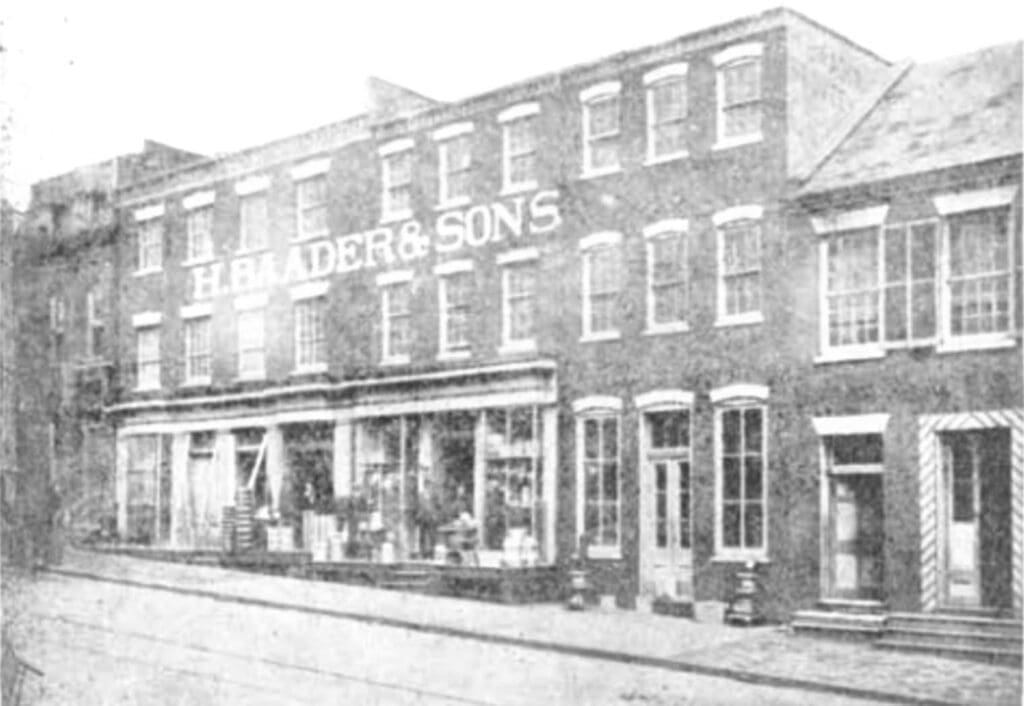
Six men died instantly, with a seventh succumbing to his injuries later. Six others were seriously injured. Among the dead was J. Carson Greene, whose body was pulled from the rubble as dawn broke over a city in shock. Also killed that night was James Keene, a wood seller and member of the Friendship Fire Company, along with five other brave volunteers: William Evans, George O. Plain, G. David Appich, John Roach, and Robert I. Taylor. Roach was pulled from the wreckage alive but died from his injuries at home.
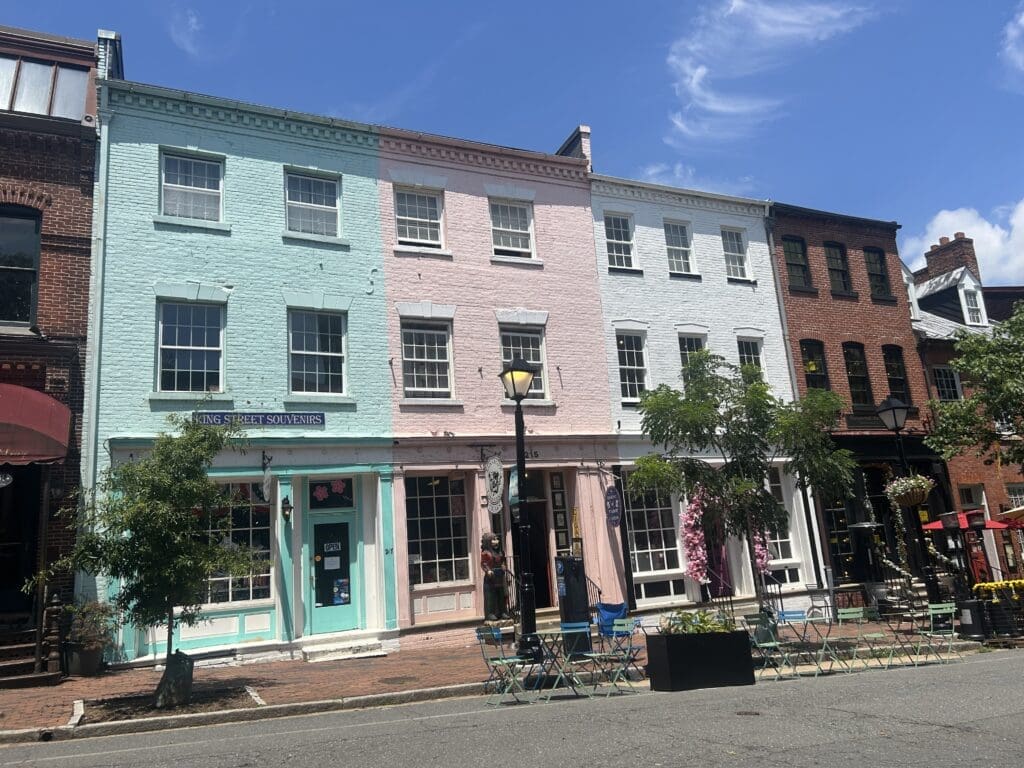
Greene came from a family deeply rooted in Alexandria’s civic traditions. His grandfather, Dr. James Carson, was a War of 1812 veteran and an active member of the Friendship Fire Company from 1810. Dr. Carson had led the formal procession to honor the Marquis de Lafayette during his 1824 visit to George Washington’s tomb—a parade that included a 17-year-old Robert E. Lee. Greene’s mother, Ann Carson Greene, had died just two months before the fire, on September 9, 1855, and rested in the family plot at Christ Church Episcopal Cemetery.
The Search for the Lost Firefighter
For 170 years, the exact burial location of J. Carson Greene remained a mystery. Among the seven who died that night, Greene was a Star Fire Company volunteer whose final resting place was listed as uncertain in historical records.
The search intensified after the 2024 discovery of Charles Glasscock, another Friendship Fire Company volunteer who died in 1852. That breakthrough—detailed in collaborative research with historian Catherine Weinraub and archaeologist Mark Ludlow—provided crucial insights into firefighter burial practices. The discovery also resolved a long-standing question about James Keene, another 1855 fire victim: despite a letter in Alexandria’s Special Collections suggesting Keene might be buried in the Friendship Fire Company plot, the GPR confirmation of Glasscock’s burial there definitively ruled out that possibility.
Contemporary newspaper evidence later confirmed that Keene was “borne to his grave in the cemetery of the Methodist Protestant Church” (Alexandria Gazette, November 20, 1855), placing him somewhere within that cemetery but not in the Friendship Fire plot. This clarification allowed researchers to focus specifically on Greene, whose family connections offered the most promising leads for a systematic search.
The focus turned to J. Carson Greene, whose Carson family lineage provided clear directional guidance for potential burial locations within Christ Church Episcopal Cemetery.
The Detective Work Begins
The investigation required piecing together fragments from multiple sources:
Cemetery records showed burials from 1855 in both Methodist Protestant Cemetery and Christ Church Episcopal Cemetery, but many entries lacked specific plot information.
Newspaper accounts from the Alexandria Gazette provided burial dates and funeral details, but not exact locations.
Family research traced Greene’s connections, revealing potential family burial areas within the Christ Church Episcopal Cemetery complex.
Physical evidence from decades of cemetery stewardship pointed to specific areas where unmarked graves might exist.
Interactive mapping technology played a crucial role in visualizing the data. The Fallen Firefighters Interactive Mapdocuments Alexandria’s firefighting history across multiple cemeteries, showing known burial locations, memorial sites, and—critically—gaps where firefighters’ graves remained unlocated. Greene’s entry on the map showed his death date and company affiliation, but his burial location remained marked as “unknown.”
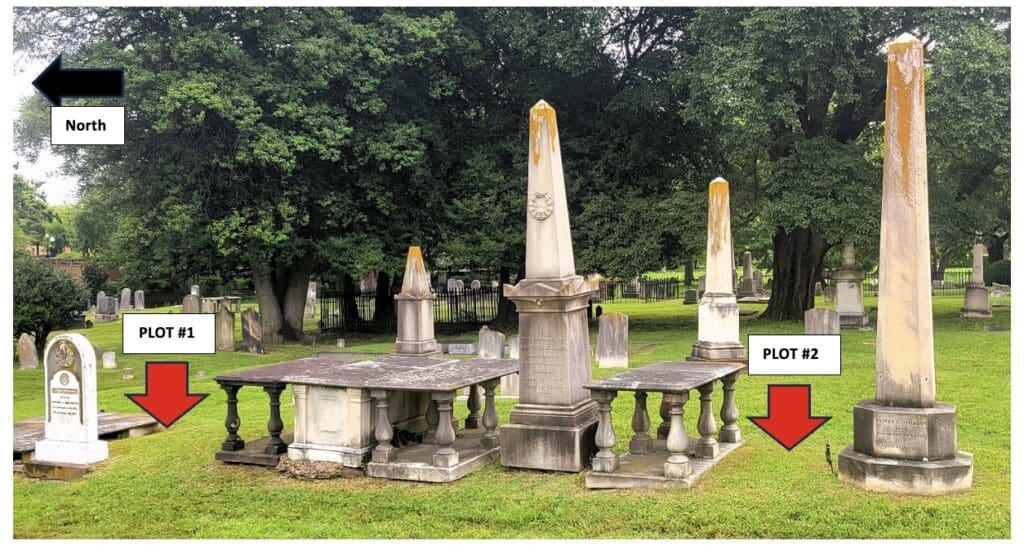
The breakthrough came when research narrowed the possibilities to two adjacent plots in Christ Church Episcopal Cemetery—unmarked areas that appeared vacant but showed subtle ground irregularities suggesting burials beneath.
Ground-Penetrating Radar Confirms the Discovery
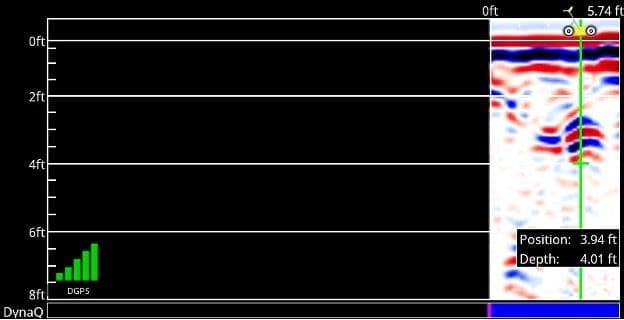
On August 5, 2025, registered professional archaeologist Mark Ludlow conducted ground-penetrating radar surveys of the suspected burial sites. The technology uses radar pulses to create subsurface images, revealing underground features without excavation.
The target area was specifically chosen for its historical significance and family connections. The suspected burial site lies adjacent to the grave of Louis Edward Greene, son of Edward and Ann (Carson) Greene. Louis Edward was born October 16, 1828, and died June 23, 1871. Intriguingly, while the family surname is spelled “Greene” on cemetery records and monuments, contemporary newspaper accounts of the 1855 fire spell it “Green,” as does a Find-A-Grave listing—a common discrepancy that often complicates historical research.
This location holds special meaning within the broader Carson family network. Dr. Samuel Carson, connected to this family plot, was the official in charge of the civilian escort for Lafayette between Washington and Alexandria in October 1824. The Carson family’s prominence and their connection to Christ Church made this a logical burial location for family members, including James Keene through his Carson lineage.
The results were dramatic.
Plot #1 showed clear evidence of two burials at standard depths—approximately 2¾ to 4 feet below ground. The radar signatures indicated decomposed human remains and coffin materials, with soil settling patterns consistent with 170-year-old interments.
Plot #2 revealed a single burial, also at appropriate depth and showing the characteristic “elongated platform” signature when scanned lengthwise.
The Proximity Discovery
The most remarkable aspect of this discovery is its location—just yards from where Colonel George Gilpin, one of George Washington’s pallbearers, was rediscovered in August 2024 after being lost for 200 years.
This clustering of major discoveries in one small area of Christ Church Episcopal Cemetery is no accident. It reflects:
- Systematic research methodology that combines archival work with ground-truth knowledge
- Scientific validation through ground-penetrating radar technology
- Collaborative expertise bringing together historians, archaeologists, and cemetery stewards
- Institutional memory from decades of hands-on cemetery stewardship
Two Burials, One Mystery
The ground-penetrating radar revealed an intriguing detail: Plot #1 contains two burials, not one. This discovery could represent one of the most extraordinary finds in Alexandria’s cemetery history.
The original target of this investigation was J. Carson Greene, one of the seven firefighters who perished in the November 17, 1855 Dowell China Shop fire. His connection to the Greene family plot, adjacent to Louis Edward Greene’s marked grave, made this location the logical place to search for his burial.
But the GPR detection of two burials raises compelling questions about who else rests in this unmarked family plot.
Historical evidence rules out one possibility: Contemporary newspaper accounts from the November 20, 1855 Alexandria Gazette definitively state that James Keene, another fallen firefighter from that tragic night, “was borne to his grave in the cemetery of the Methodist Protestant Church.” This places Keene’s burial location somewhere within Methodist Protestant Cemetery, but not in the Friendship Fire Company plot—that location was definitively identified in 2024 as containing Charles Glasscock, who died in 1852. Despite a letter in Alexandria’s Special Collections suggesting Keene might be in the Friendship Fire plot, the GPR confirmation of Glasscock’s burial there rules out that possibility.
Several possibilities emerge for the identity of the second burial:
A family member from the Carson-Greene network could explain the shared burial space. The complex family relationships in 19th-century Alexandria often resulted in extended family burials within the same plot.
Louis Edward Greene himself might be one of the burials, despite having a marked grave nearby. Cemetery plots were often larger than surviving monuments indicate, and ground settling or record-keeping could account for location discrepancies.
An earlier family burial predating the visible monuments could represent an older generation of the Carson or Greene families.
The discovery adds another dimension to Alexandria’s firefighting history while demonstrating how primary source research can both solve mysteries and reveal new ones.
The Broader Significance
This discovery represents more than solving a single historical mystery. It demonstrates how modern technology can recover voices that have been silenced by time, giving forgotten heroes their due recognition.
J. Carson Greene and his fellow firefighters embodied the volunteer spirit that built America. They weren’t professional firefighters—they were ordinary citizens who risked everything when their community needed them. On November 17, 1855, seven paid the ultimate price.

Their sacrifice led to lasting change. The Alexandria fire companies draped their engine houses in mourning—Friendship for six months, Star for an entire year. They raised funds for a memorial that still stands at Ivy Hill Cemetery, honoring the seven fallen heroes.
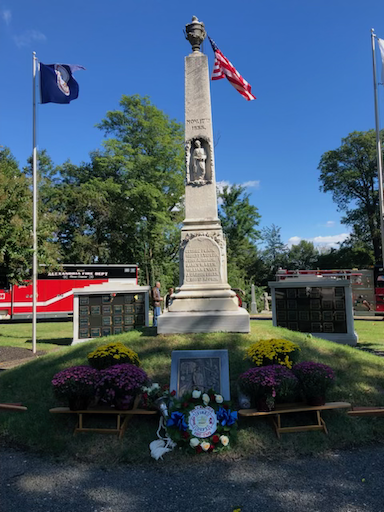
But individual graves were lost, their exact locations fading from memory as decades passed.
Active History in Real Time
What makes this discovery extraordinary is that it’s happening now, in real time, just yards from another major breakthrough. Visitors to the Wilkes Street Cemetery Complex aren’t just hearing about historical discoveries—they’re witnessing them.
This is what sets Alexandria’s cemetery tours apart from typical historical experiences. While other tours recite familiar stories about buildings and battles, these grounds continue yielding new discoveries, new stories, new connections to America’s past.
The methodical approach that located both Gilpin and Greene continues across the 82-acre complex. With over 35,000 burials and countless untold stories, each tour offers the possibility of discussing recently discovered graves and ongoing research.
The Next Chapter
Confirmation of J. Carson Greene’s identity awaits further archival research at Alexandria Library’s Special Collections. Cemetery records, newspaper accounts, and family documentation may provide the final pieces needed to definitively confirm this discovery.
Meanwhile, the mystery of the second burial in Plot #1 opens new avenues of investigation. Recent newspaper evidence has ruled out James Keene, placing his burial definitively in Methodist Protestant Cemetery. But who else might rest in this forgotten corner of Alexandria’s sacred ground? What family connections or burial arrangements from the 1850s are waiting to be uncovered?
The search for James Keene’s exact location in Methodist Protestant Cemetery now becomes another research priority, guided by the same systematic approach that led to this Greene family plot discovery.
A Legacy Restored
If confirmed, J. Carson Greene’s rediscovered grave represents more than solving a historical puzzle. It restores dignity to a forgotten hero, connects his individual sacrifice to the broader story of Alexandria’s development, and demonstrates how modern technology can give voice to the silenced past.
The mystery of the second burial adds another layer of intrigue to this discovery, while recent newspaper evidence has clarified that James Keene’s search must continue in Methodist Protestant Cemetery.
Standing in Christ Church Episcopal Cemetery, visitors can now experience something truly unprecedented: two major historical discoveries across the cemetery grounds, separated by 200 years of history but united by the same commitment to uncovering Alexandria’s buried truths.
From Washington’s inner circle to Alexandria’s bravest firefighters, this sacred ground continues revealing the extraordinary lives that shaped our nation’s story—one discovery at a time.
The search for J. Carson Greene’s grave represents ongoing collaborative research between cemetery steward and public historian David Heiby, historian Catherine Weinraub, and archaeologist Mark Ludlow. Heiby, who serves as Superintendent of the Presbyterian Cemetery and Vice President of the Virginia Trust for Historic Preservation, has spent over a decade uncovering Alexandria’s buried history through systematic archival research and cemetery stewardship. His previous discoveries include locating George Washington’s lost pallbearer Colonel George Gilpin in 2024, identifying Philip Richard Fendall Sr.’s grave at historic Ivy Hill Cemetery in 2023, and numerous other historically significant figures whose graves had been forgotten for generations. Ground-penetrating radar surveys were conducted by M3 Archaeology LLC using Sensors & Software NOGGIN 250 GPR technology.