The 19th century was the height of “canal mania,” and Alexandria was no exception. Following the lead of the Erie Canal and the Chesapeake & Ohio Canal, Alexandrians pushed to connect their port to interior trade routes. On December 15, 1843, the seven-mile-long Alexandria Canal officially opened. It extended the 185-mile C&O Canal across the Potomac River from Georgetown into Alexandria by way of the aqueduct bridge, which carried canal boats over the river. Once in Alexandria, boats were lowered to the city’s wharves via a system of lift locks.
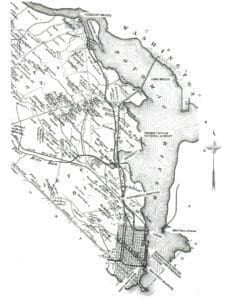
The canal operated until 1886, helping sustain Alexandria’s commercial importance in the decades before and during the early railroad era. Portions of the canal’s path can still be traced today along the George Washington Parkway near Bashford Lane and Second Street.
Burial Ground Rediscovered
During the construction of the canal’s tide locks in 1843, workers rediscovered an early cemetery—the Fairfax Street burial ground—which had been largely forgotten. At least ten victims of Alexandria’s deadly 1803 Yellow Fever epidemic had been interred there. The story illustrates how the city’s physical and commercial expansion is deeply entwined with its layers of memory and loss.
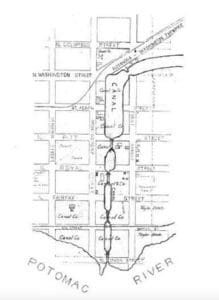
This rediscovery helped prompt new conversations about public health and burial space—conversations that would ultimately lead to the development of the Wilkes Street Cemetery Complex, a 19th-century burial district where over 35,000 individuals now rest, preserving generations of Alexandria’s history in one remarkable place.