Alexandria’s Revolutionary War patriots left a legacy that extended far beyond the battlefield—into the fire companies, civic institutions, and burial grounds that shaped the city they helped found.
This article originally appeared in the May 2026 newsletter of the Friendship Veterans Fire Engine Association (FVFEA).
As the nation approaches the 250th anniversary of the American Revolution, Alexandria has a remarkable local story to tell. More than 160 documented Revolutionary War patriots are buried across 13 historic burial grounds in the city, creating one of Virginia’s richest landscapes of Revolutionary memory. Their graves reveal that Alexandria was not simply a place that watched the founding of the nation from afar. It was a place where the Revolution lived on—in the lives people built afterward, in the institutions they shaped, and in the habits of civic duty they carried into the early republic.
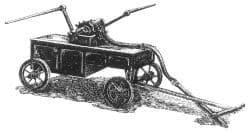
Founded in 1774, Friendship Fire Company was part of the same culture of service, cooperation, and public duty that was taking shape in Alexandria on the eve of the Revolution. At the very moment Alexandrians were organizing themselves for political action, they were also organizing themselves for civic protection. Friendship emerged from that same local spirit of mutual responsibility: neighbors stepping forward to protect homes, warehouses, shops, churches, and one another in a growing port town.
That larger civic world can still be traced in Alexandria’s burial grounds.
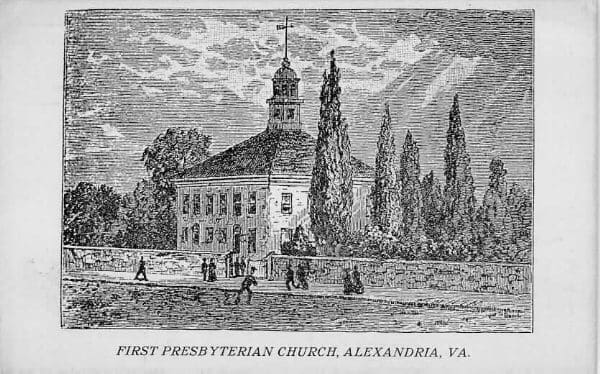
At the Old Presbyterian Meeting House burial ground, several Revolutionary patriots also appear in the story of early firefighting. James Wilson, buried in the Meeting House churchyard, was a Revolutionary patriot, merchant, and ship owner, but he was also a charter member of the Relief Fire Company in 1788.
Nearby lies Daniel Douglass, another patriot buried in the same churchyard, who was also a member of the Relief Fire Company.
George Hunter, buried there as well, belonged to the Sun Fire Company, as did Jesse Taylor, the merchant who supported the patriot cause and was later elected mayor. David Arell, a Revolutionary officer, mayor, and civic leader buried at the Meeting House, was likewise a member of the Sun Fire Company. So too was John Carlyle, one of Alexandria’s founders, whose grave lies immediately west of the bell tower and south of the brick walkway. Carlyle is best remembered as a signer of the Fairfax Resolves and one of the city’s most important colonial figures, yet he was also a founding member of the Sun Fire Company, linking Alexandria’s political awakening directly to its early firefighting tradition.
The same pattern appears in the grave of Robert Allison Sr., also buried at the Old Presbyterian Meeting House burial ground. Allison served in the Continental Line and later became a member of the Sun Fire Company. His life, like those of the others buried there, shows that Revolutionary service did not end with independence. The same men who fought, supplied, organized, and governed also helped protect the town itself.
That story continues west in the Presbyterian Cemetery within the Wilkes Street Cemetery Complex. There lies Captain William Harper, one of the city’s most distinguished Revolutionary veterans. Harper crossed the Delaware with Washington, fought at Trenton, and endured Valley Forge. After the war, he became a civic leader in Alexandria and a member of the Relief Fire Company. He is buried in the Presbyterian Cemetery, where his life forms a powerful bridge between military service and public duty at home.
Also buried there is Colonel Dennis Ramsay, in Section 42, Plot 72. Ramsay is remembered for many things: his Revolutionary service, his civic leadership, and his famous role in addressing George Washington as “Mr. President.” But he was also a member of the Sun Fire Company. In his case, as in so many others, the same man who stood close to national history also stood close to the everyday work of protecting Alexandria.
Other names in the Presbyterian Cemetery reinforce the same point. James Irwin, buried on the Adam family lot, was a Revolutionary patriot and a member of the Relief Fire Company. Captain David Black, also buried in the Presbyterian Cemetery, is listed as a Revolutionary patriot and later a member of the Relief Fire Company. Taken together, these men show that civic protection in Alexandria was not some separate chapter of the city’s story. It was part of the same culture of organized public service that shaped the Revolutionary era itself.
The city’s burial grounds also show that this tradition was not confined to one neighborhood or one congregation. At Christ Church Burial Ground, for example, Colin McIver is buried as a Revolutionary patriot and member of the Sun Fire Company. His grave adds another point on the map, reminding us that Alexandria’s firefighting tradition was woven through the city’s wider civic and mercantile life.

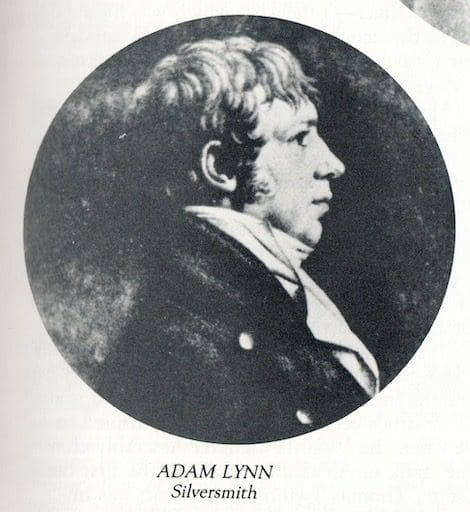
The early history of Friendship itself points in the same direction. Its first members included men such as William McKnight, William Paton, Peter Wise, Adam Lynn, Edward Ramsay, and Benjamin Shreve—largely tradesmen, merchants, and working townsmen rather than the most elite names in Alexandria society. That alone is important. It shows that the impulse to organize for the public good ran broadly through the town.
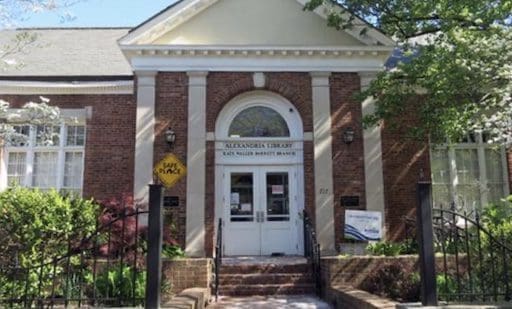
One of those names, Benjamin Shreve, also appears in Alexandria’s burial story. Benjamin Shreve Jr., a Revolutionary patriot, is buried in the Quaker Burial Ground, now beneath the Kate Waller Barrett Library. His presence offers one direct overlap between the Friendship story and the Revolutionary burial record.
Other Friendship-associated families carry that pattern into the next generation. In the War of 1812 burials, the Lynn and McKnight families appear again. Adam Lynn Jr. is buried in St. Paul’s Cemetery in the Wilkes Street Cemetery Complex, while Captain Charles McKnight is buried in the Presbyterian Cemetery. These later burials show how Alexandria’s traditions of military duty, civic responsibility, and volunteer service continued well beyond the Revolution. The same families remained woven into the city’s public life as one generation succeeded another.
Taken together, these burial locations reveal something larger than biography. They show that Alexandria’s early fire companies grew from the same civic culture that sustained the patriot cause. The men who fought for independence, furnished supplies, served in local government, worshipped in the city’s churches, and built its commerce also helped create and support the institutions that protected it from fire. Their service shifted from battlefield to street, from resistance to responsibility, but the underlying values remained the same: discipline, cooperation, vigilance, and public duty.
As America 250 approaches, Alexandria’s burial grounds offer more than remembrance. They show how the spirit of service endured. The men buried there did not simply witness the birth of a nation. They helped defend it, build it, and protect the town that became home. In Alexandria, the story of the Revolution is written not only in military records and public commemorations, but also in churchyards, cemetery paths, and the long tradition of citizens stepping forward to serve one another.
And that is a story worth telling.