On December 14, 1799, George Washington died at Mount Vernon. Four days later, on December 18, George Washington’s funeral brought many of Alexandria’s leading citizens to Mount Vernon — physicians who had fought to save him, clergy who conducted the burial service, and pallbearers who had known him as a neighbor, a merchant, and a fellow veteran. What strikes me, after more than a decade researching Alexandria’s cemeteries, is not just who was there — but where they are now. Most of them never left. Their graves are still here, scattered across Alexandria’s historic burial grounds, quietly preserving the city’s most intimate connection to the nation’s first president.
Many of the burial locations and historical details referenced here draw on research conducted through the Gravestone Stories project documenting Alexandria’s historic cemeteries. This article focuses on those whose graves can still be found in Alexandria today.
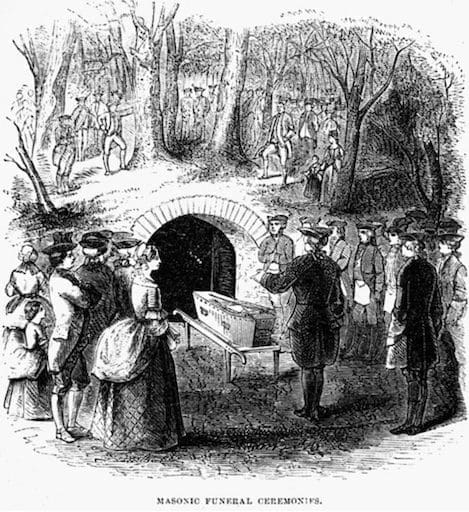
Physicians at George Washington’s Funeral
Three physicians attended Washington during his final illness at Mount Vernon and were present at George Washington’s funeral on December 18, 1799. Two were Alexandrians.
Dr. James Craik (1730–1814)
Old Presbyterian Meeting House Burial Ground — Alexandria, Virginia
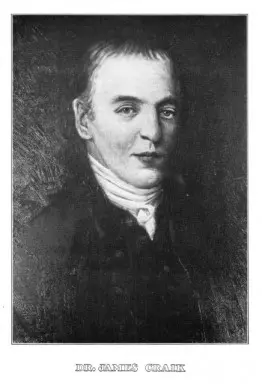
James Craik was Washington’s lifelong friend and personal physician. The two men first served together during the French and Indian War, and Craik later became Chief Physician and Surgeon of the Continental Army during the American Revolution. When Washington fell gravely ill on December 14, 1799, Craik was summoned to Mount Vernon and remained at his bedside throughout the final hours. He was among the small group present at Washington’s death and later attended the funeral on December 18. Craik died in 1814 and is buried beside the wall of the Old Presbyterian Meeting House burial ground in Alexandria.
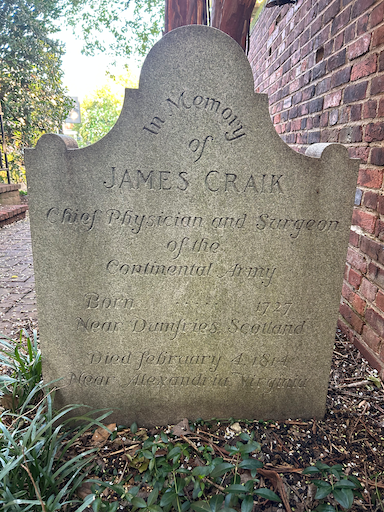
Read the full story of Dr. James Craik →
Dr. Elisha Cullen Dick (1762–1825)
Friends Burying Ground (Queen Street) — Alexandria, Virginia
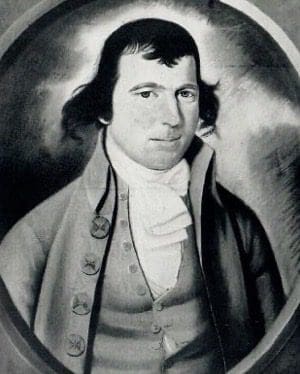
Elisha Cullen Dick was one of Alexandria’s leading physicians and civic leaders. Summoned to Mount Vernon during Washington’s final illness, Dick joined Craik at the bedside of the dying president. As Washington struggled to breathe, Dick urged the other physicians to attempt a tracheotomy — a procedure that might have relieved the obstruction in Washington’s throat. The more senior physicians declined the operation.
Dick also played a central role in George Washington’s funeral itself. As Worshipful Master of Alexandria Lodge No. 22 — Washington’s Masonic lodge — he organized the lodge’s participation in the funeral ceremonies and read the Masonic burial service during Washington’s interment at Mount Vernon. Dick later served Alexandria as mayor, health officer, justice of the peace, and coroner. He died in 1825 and was buried in the Friends Burying Ground on Queen Street, today the site of the Kate Waller Barrett Branch Library.
Read the full story of Dr. Elisha Cullen Dick →
Clergy at George Washington’s Funeral
Rev. Dr. James Muir (1757–1820)
Old Presbyterian Meeting House — Alexandria, Virginia

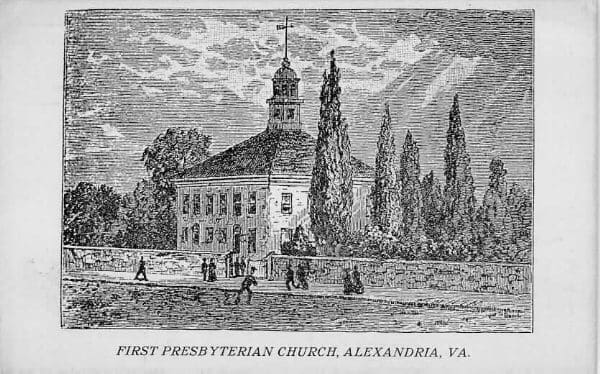
James Muir served as pastor of the Old Presbyterian Meeting House from 1788 until his death in 1820. He attended Washington’s funeral as chaplain of Alexandria’s Masonic Lodge No. 22, whose members played a prominent role in the funeral ceremonies at Mount Vernon. In the days following Washington’s death, the Presbyterian Meeting House — it would not become known as the Old Presbyterian Meeting House until 1949 — became a focal point for Alexandria’s public mourning. Citizens of Alexandria gathered there for a series of memorial services, culminating in a grand commemorative service on February 22, 1800, Washington’s birthday, following a procession from City Hall at Market Square. Muir’s remains lie approximately thirteen feet beneath the floorboards of the 1837 sanctuary.

Read the full story of Rev. Dr. James Muir →
Alexandrians at George Washington’s Funeral Procession
Several Alexandrians participated directly in George Washington’s funeral on December 18, 1799, serving as honorary pallbearers, bier carriers, and commanders of the military escort at Mount Vernon.
Honorary Pallbearers at George Washington’s Funeral
Colonel Charles Simms Sr. (1755–1819)
Old Christ Church Burial Ground — Alexandria, Virginia
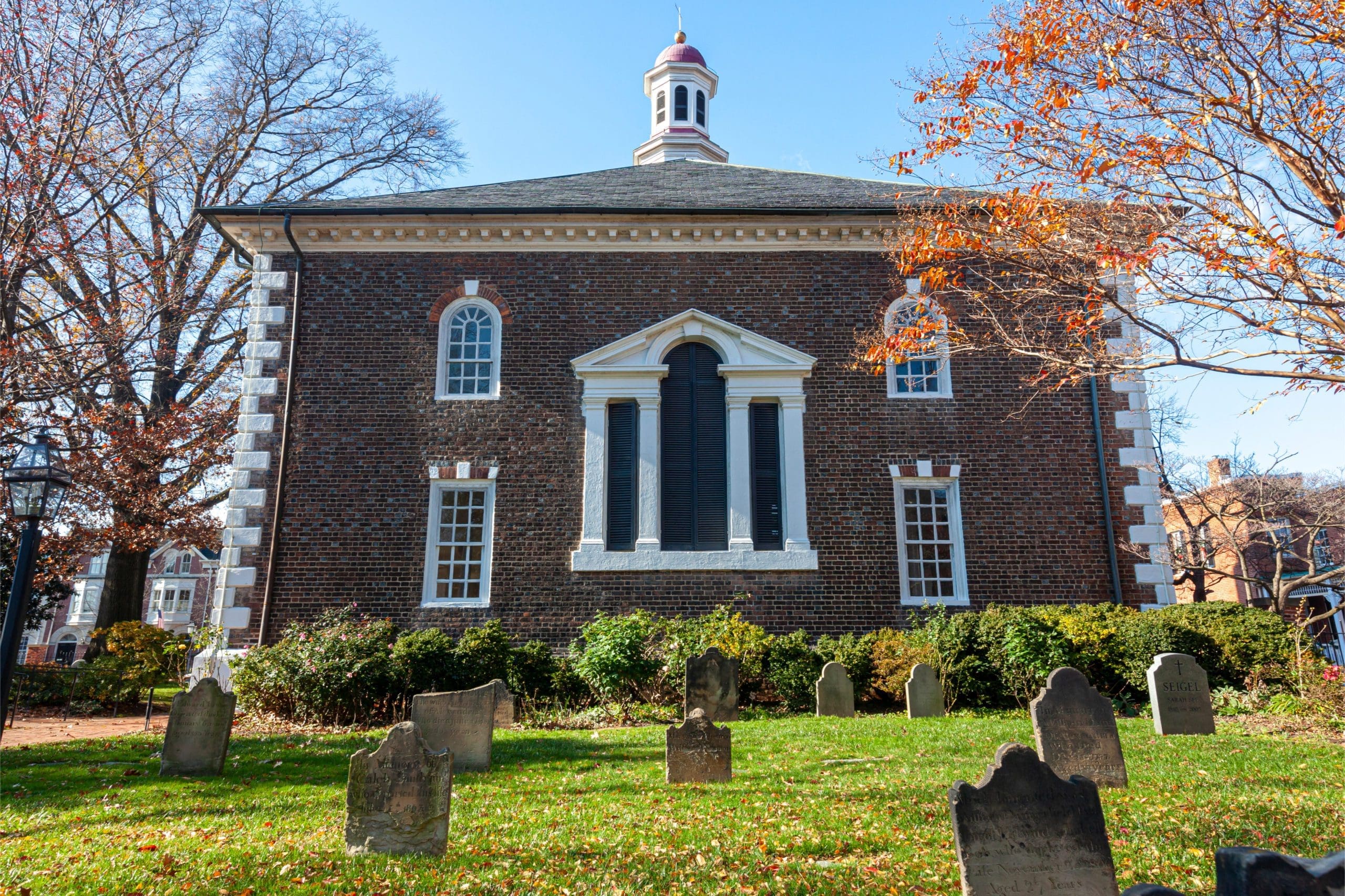
A Revolutionary War officer who served in the 2nd Virginia Regiment, Charles Simms became a prominent civic leader and close associate of Washington. He was a member of the Society of the Cincinnati and remained active in the civic life of the early republic. At Washington’s funeral on December 18, 1799, Simms walked beside the coffin as one of the honorary pallbearers. He later served as mayor of Alexandria in 1814.
Read the full story of Colonel Charles Simms →
Colonel Dennis Ramsay (1756–1810)
The Presbyterian Cemetery — Alexandria, Virginia
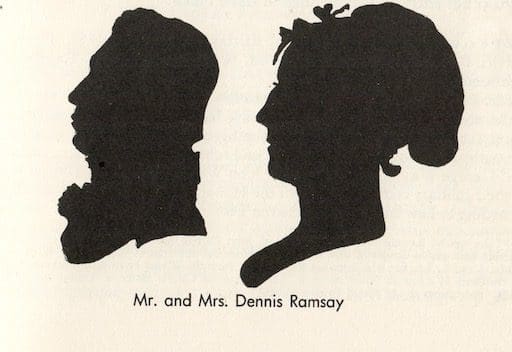
Dennis Ramsay served as mayor of Alexandria and was a close acquaintance of Washington. He is traditionally credited with being the first person to address Washington as “Mr. President.” At George Washington’s funeral, he served as an honorary pallbearer, walking in the procession that accompanied Washington’s coffin to the tomb. He is buried in The Presbyterian Cemetery, part of the Wilkes Street Cemetery Complex.
Read the full story of Colonel Dennis Ramsay →
Colonel Philip Marsteller (1741–1803)
Christ Church 18th-Century Burial Ground — Alexandria, Virginia
Philip Marsteller was a Revolutionary War officer, merchant, and early mayor of Alexandria, elected in 1791. He and Washington conducted business together for many years. When Washington died in December 1799, Marsteller served as one of the honorary pallbearers at the Mount Vernon funeral. He died in Alexandria in 1803. During the Union occupation of Alexandria during the Civil War, his gravestone was removed, and the exact location of his grave within the burial ground is now unknown.
Read the full story of Colonel Philip Marsteller →
Colonel George Gilpin (1740–1813)
Christ Church Episcopal Cemetery — Alexandria, Virginia
George Gilpin was a Revolutionary War officer, surveyor, and longtime Collector of the Port of Alexandria. At George Washington’s funeral in 1799, he served as one of the honorary pallbearers, reflecting his prominence within the Alexandria community. Gilpin died in 1813. For many years his grave was believed lost — until research connected with Gravestone Stories helped rediscover its location, one of the project’s most significant field discoveries.
Read the full story of Colonel George Gilpin →
Bier Carriers at George Washington’s Funeral
Lawrence Hooff Jr. (1780–1842)
St. Paul’s Cemetery — Alexandria, Virginia
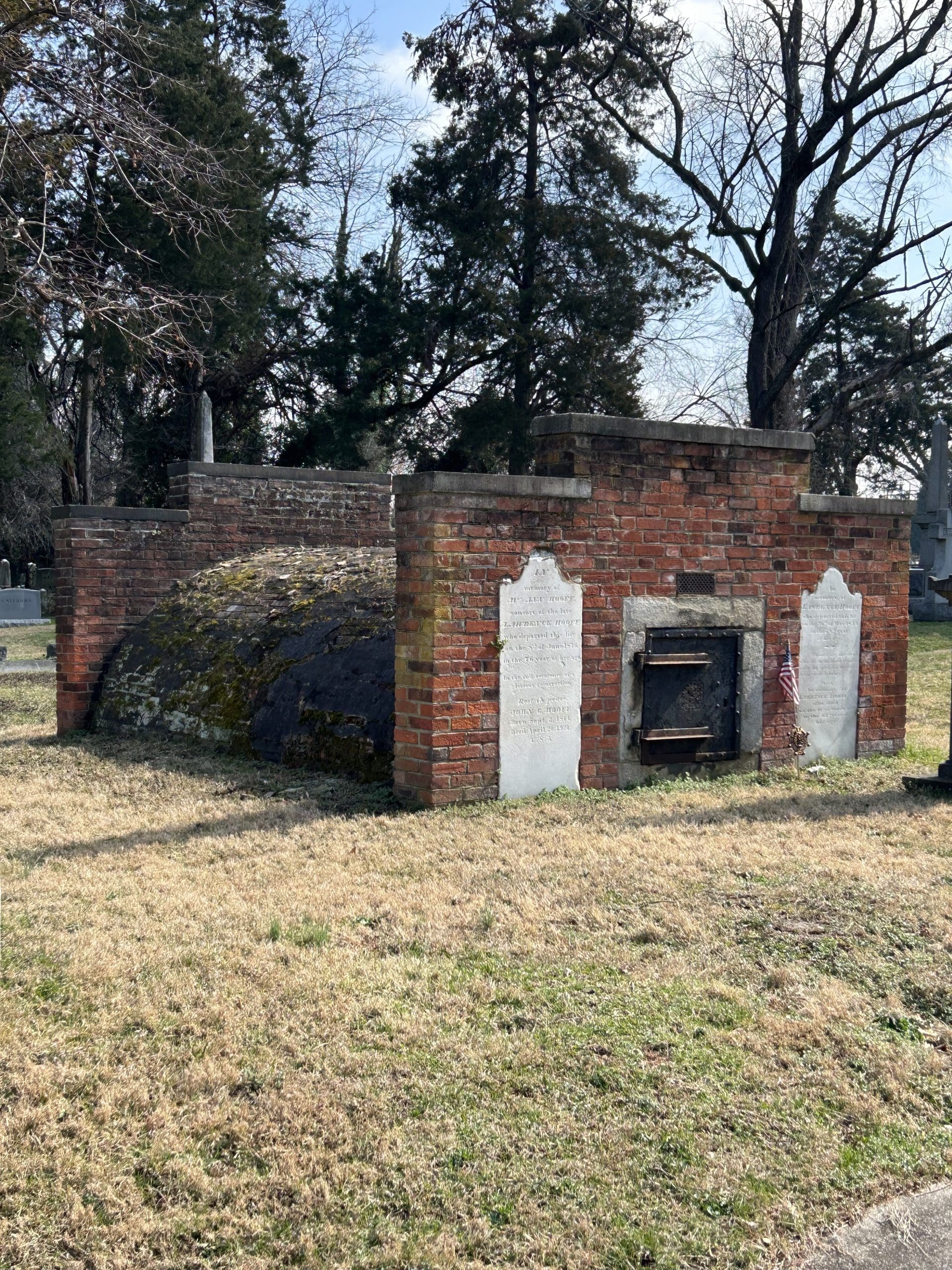
Lawrence Hooff Jr. served as one of the bier carriers at George Washington’s funeral, helping physically carry the coffin during the procession at Mount Vernon. He is buried in St. Paul’s Cemetery, one of the historic burial grounds within the Wilkes Street Cemetery Complex in Alexandria.
Read the full story of Lawrence Hooff Jr. →
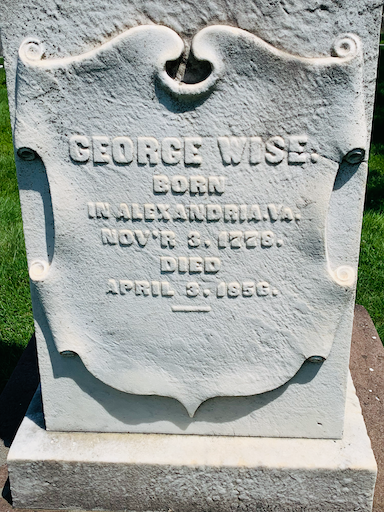
George Wise (1778 or 1780–1856)
The Presbyterian Cemetery — Alexandria, Virginia
George Wise participated in the funeral ceremonies for George Washington at Mount Vernon on December 18, 1799, serving as one of the bier carriers who helped physically carry Washington’s coffin during the procession to the tomb. He later died in Alexandria and was buried in the Presbyterian Cemetery, part of the Wilkes Street Cemetery Complex.
Read the full story of George Wise →
Military Escort at George Washington’s Funeral
Captain William Harper (1761–1829)
The Presbyterian Cemetery — Alexandria, Virginia
William Harper was a Revolutionary War veteran, rope maker, and civic leader in Alexandria. During George Washington’s funeral at Mount Vernon on December 18, 1799, Harper commanded the Alexandria Artillery as part of the military escort accompanying the procession. He is buried in The Presbyterian Cemetery, part of the Wilkes Street Cemetery Complex.
Read the full story of Captain William Harper →
Robert Young (1751–1824)
The Presbyterian Cemetery — Alexandria, Virginia
Robert Young was a prominent Alexandria merchant and civic leader closely connected to the town’s political and commercial life during Washington’s era. During George Washington’s funeral at Mount Vernon, Young commanded the Alexandria Cavalry, which participated in the funeral procession. He is buried in The Presbyterian Cemetery, part of the Wilkes Street Cemetery Complex.
Read the full story of Robert Young →
George Deneale
Christ Church Cemetery (Wilkes Street) — Alexandria, Virginia
George Deneale was a prominent Alexandria attorney, Freemason, and civic leader. He commanded the military funeral procession at George Washington’s funeral on December 18, 1799, overseeing the formal order of march that accompanied the coffin to Washington’s tomb at Mount Vernon. Deneale was also a founding member of Alexandria’s Sun Fire Company. He is buried at Christ Church Cemetery, part of the Wilkes Street Cemetery Complex.
Major Henry Piercy
Christ Church Cemetery (Wilkes Street) — Alexandria, Virginia
Henry Piercy was a Revolutionary War veteran who fought alongside Washington in nearly every major engagement of the war. At George Washington’s funeral on December 18, 1799, Piercy led the Independent Blues as part of the military escort accompanying the procession at Mount Vernon. He is buried at Christ Church Cemetery, part of the Wilkes Street Cemetery Complex.
Other Alexandrians at George Washington’s Funeral Procession
William Hodgson
Christ Church Cemetery (Wilkes Street) — Alexandria, Virginia
William Hodgson was an English-born merchant who became a prominent figure in Alexandria’s commercial and civic life. He participated in the procession at George Washington’s funeral on December 18, 1799. Hodgson had previously gained notoriety for calling King George III a “German Hogbutcher,” a remark that landed him in prison — making his presence among the mourners at America’s first president’s funeral a measure of how thoroughly he had embraced his adopted country. He is buried at Christ Church Cemetery, part of the Wilkes Street Cemetery Complex.
Witnesses at George Washington’s Funeral
Caroline Branham (1764–1843)
Christ Church — Alexandria, Virginia (grave unmarked)
Caroline Branham was enslaved by the Custis family and served as Martha Washington’s chambermaid. She attended Washington during his final illness and was present in the household when he died on December 14, 1799. Branham later lived in Alexandria and died in 1843. Historical sources associate her burial with Christ Church, though her grave remains unmarked — a reminder that the stories of the enslaved men and women present at this history-defining moment deserve equal place in the historical record.
Read the full story of Caroline Branham →
Alexandria’s Civic Circle and George Washington’s Funeral
Beyond those present at the funeral itself, several of Alexandria’s leading civic figures were deeply connected to the mourning of Washington and the events surrounding his death.
Joseph Ingle
Christ Church Cemetery (Wilkes Street) — Alexandria, Virginia
Joseph Ingle was an Alexandria cabinetmaker whose role in George Washington’s funeral was as intimate as any pallbearer’s. It was Ingle who crafted the mahogany coffin in which Washington was laid to rest, for which he was paid $88. No Alexandrian contributed more directly to the physical preparation for Washington’s burial. His exact burial lot within Christ Church Cemetery remains uncertain, but he is associated with the cemetery at the Wilkes Street Cemetery Complex. Today, visitors can walk from Ingle’s surviving shop at 103 S. Royal Street to his burial ground at the Wilkes Street Cemetery Complex — a short distance that spans more than two centuries.
William Herbert
Christ Church Cemetery (Wilkes Street) — Alexandria, Virginia
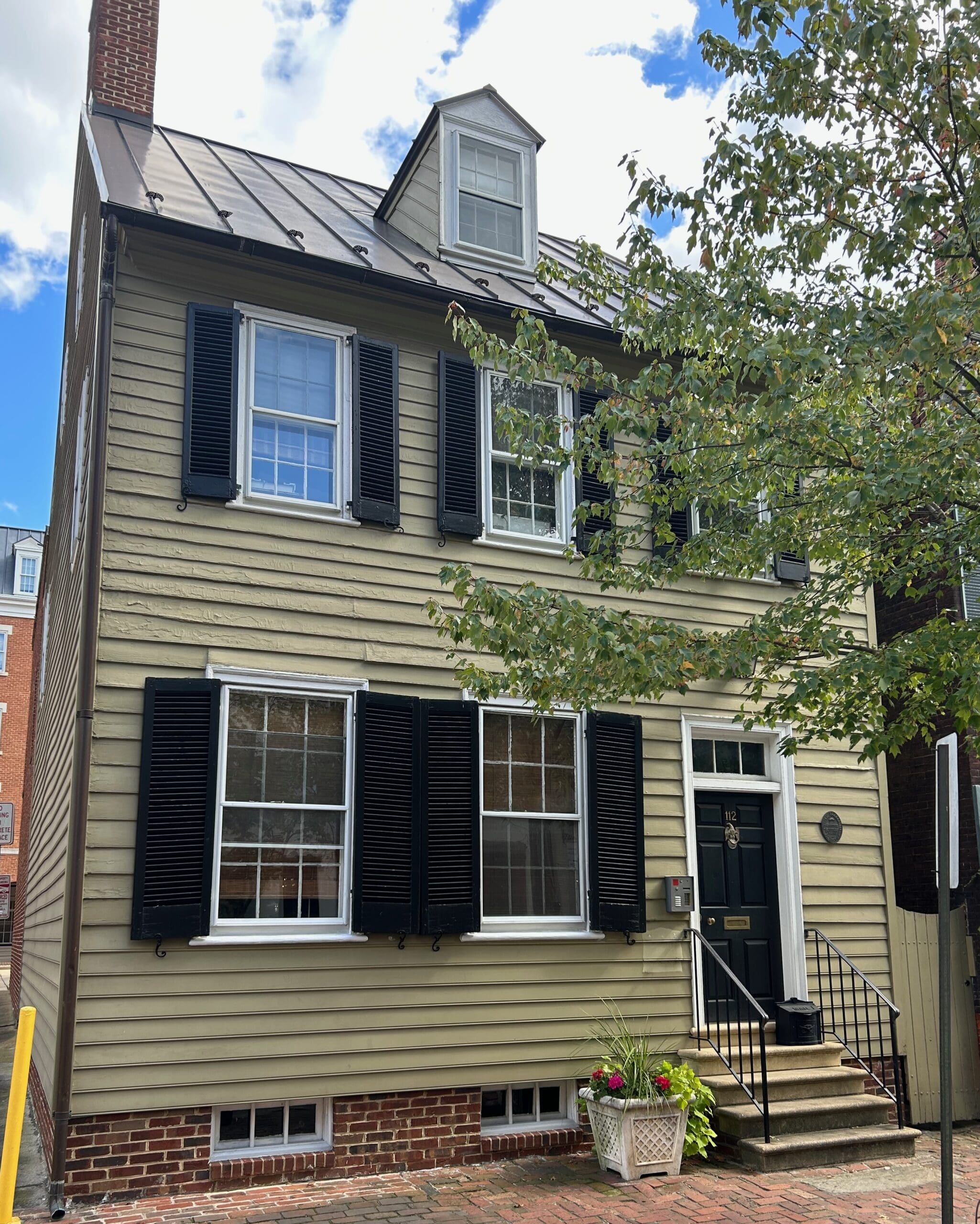
William Herbert was an Irish-born merchant who rose to become one of Alexandria’s most influential civic figures — serving as mayor of Alexandria and as president of the Bank of Alexandria. He attended George Washington’s funeral on December 18, 1799. Herbert was also the son-in-law of John Carlyle, one of Alexandria’s founding figures. He is buried at Christ Church Cemetery, part of the Wilkes Street Cemetery Complex.
Philip Richard Fendall I (1734–1805)
Ivy Hill Cemetery — Alexandria, Virginia
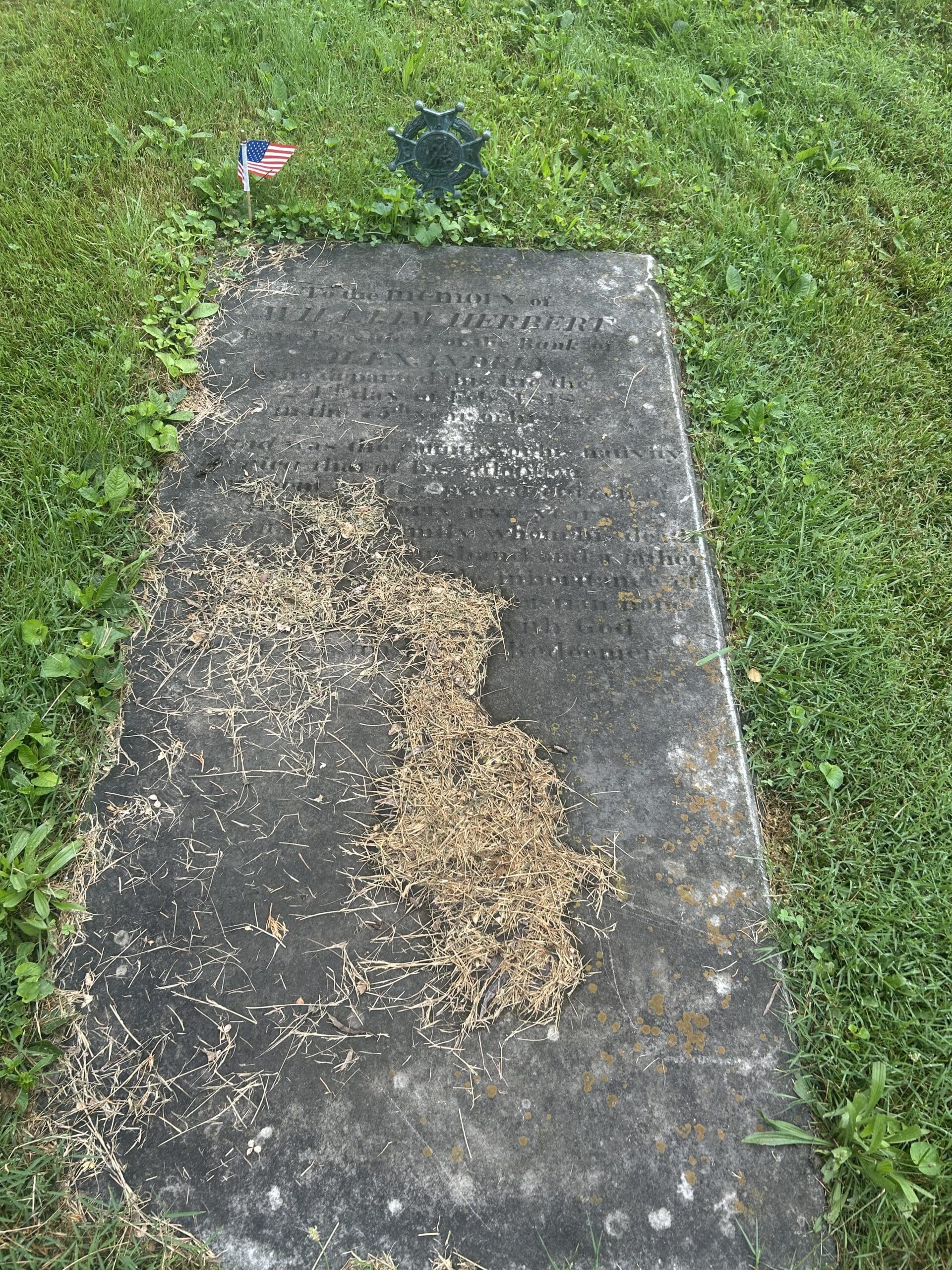
Philip Richard Fendall I built the Lee-Fendall House in 1785 and was one of Alexandria’s leading merchants and civic figures. Washington visited the Fendall household during his lifetime, and Alexandrians later gathered there following Washington’s death to discuss the town’s role in the funeral ceremonies. In 2023, research conducted through Gravestone Stories helped identify Fendall’s previously unrecognized grave in Ivy Hill Cemetery, restoring the burial place of one of Alexandria’s early civic leaders. He should not be confused with his son, Philip Richard Fendall II (1794–1868), another prominent Alexandrian featured on the Gravestone Stories interactive burials map.
Read the full story — Part 1 → Part 2 →
Many of the men who attended Washington’s funeral were members of Alexandria’s Revolutionary generation. Explore the full list of 162 Revolutionary patriots buried in Alexandria →
Explore These Graves on the Interactive Burials Map
Several of the Alexandrians who attended George Washington’s funeral are featured on the Gravestone Stories Interactive Alexandria Burials Map, including Colonel Dennis Ramsay, Colonel George Gilpin, Dr. James Craik, Rev. Dr. James Muir, and Dr. Elisha Cullen Dick. The map allows visitors to explore burial locations across the city and read additional biographies about the individuals who shaped Alexandria’s early history.
Taken together, these individuals illustrate how deeply Alexandria was connected to the final chapter of George Washington’s life. Within the city’s historic landscape are people who attended Washington during his final illness, conducted the burial service at George Washington’s funeral, served as honorary pallbearers and bier carriers, participated in the military escort, witnessed his final moments within the household, and helped guide the community through the nation’s mourning.
Those who participated in George Washington’s funeral — including Dennis Ramsay, George Wise, Lawrence Hooff Jr., Robert Young, and William Harper — are buried today within the Wilkes Street Cemetery Complex. Others, including Dr. James Craik, Dr. Elisha Cullen Dick, and Colonel Charles Simms, rest in Alexandria’s older burial grounds closer to the city’s historic center. More than two centuries later, they can still be found in Alexandria’s cemeteries, their graves quietly preserving the city’s enduring connection to the nation’s first president.
I’ve stood at most of these graves. Some are well-marked and easy to find. Others took years of research to locate. What they share is this: the men and women buried here didn’t experience December 18, 1799 as history. They experienced it as a devastating personal loss — the death of a neighbor, a patient, a commander, a friend. History came later. The graves were always just graves. That’s what makes walking among them so remarkable. Two centuries disappear, and for a moment you are simply standing beside the people who were there.
Have you visited these historic graves? Share your experience in the comments below, or contact us to book a guided tour of the Wilkes Street Cemetery Complex where many of these figures are buried.
Sources
Alexandria Association. (1956). Our town 1749–1865 at Gadsby’s Tavern Alexandria, Virginia. The Dietz Printing Company.
Dahmann, D. C. (2002). The roster of historic congregational members of the Old Presbyterian Meeting House.
Greenly, M. (1996). Those upon the curtain has fallen: The past and present cemeteries of Alexandria, VA. Alexandria Archaeology Publications.
Moore, G. M. (1949). Seaport in Virginia: George Washington’s Alexandria. Garrett and Massie, Incorporated.
Old Presbyterian Meeting House. (n.d.). Old Presbyterian Meeting House’s visitor’s guide to Alexandria’s historic Old Presbyterian Meeting House. Trifold pamphlet.
Old Presbyterian Meeting House Churchyard Burial Ground. (n.d.). Trifold pamphlet.
Pippenger, W. E. (1992). Tombstone inscriptions of Alexandria, Virginia: Volume 1. Family Line Publications.
Pippenger, W. E. (1992). Tombstone inscriptions of Alexandria, Virginia: Volume 3. Family Line Publications.
Powell, M. G. (2000). The history of Old Alexandria, VA, from July 13, 1749 – May 24, 1861. Willow Bend Books.
Wineberger, J. A. (1857). The tomb of Washington at Mount Vernon. T. McGill.
Wright, F. E., & Pippenger, W. E. (2012). Early church records of Alexandria City and Fairfax County, Virginia. Heritage Books.
Related Reading on Gravestone Stories
- Dr. James Craik: Washington’s Lifelong Physician
- Colonel George Gilpin: Revolutionary Hero and Alexandria’s Unsung Architect
- Colonel Dennis Ramsay: Mayor and Confidant of George Washington
- Caroline Branham: The Enslaved Chambermaid Who Witnessed Washington’s Final Moments
- Interactive Alexandria Burials Map
- The Wilkes Street Cemetery Complex: America’s Most Historic Cemetery Cluster